April 17, 2025
By Andy Kaiyala, Vice President, Digital Construction Management, WSB

Breaking Down Silos and Unlocking Powerful Project Data

In today’s fast-paced civil construction industry, the ability to make informed decisions quickly is paramount. Model-centric design and construction management is revolutionizing how complex projects are planned, designed, and delivered by bringing powerful, real-time data to the forefront for enhanced decision making. These model-based workflows go far beyond visualization. They create a shared source of truth that fuels both collaboration and data intelligence.

Digital Models are the New Meeting Room

One of the most impactful benefits of model-centric workflows is their ability to break down silos across project teams. Traditional design and construction management processes often suffer from fragmented communication and isolated data, leading to inefficiencies, rework, and missed opportunities. By adopting a model-centric approach, engineers, contractors, and owners can access a single source of truth, ensuring that everyone is on the same page and working towards the same goals. This streamlined collaboration reduces friction, closes communication gaps, and improves overall project efficiency.

From Models to Meaning

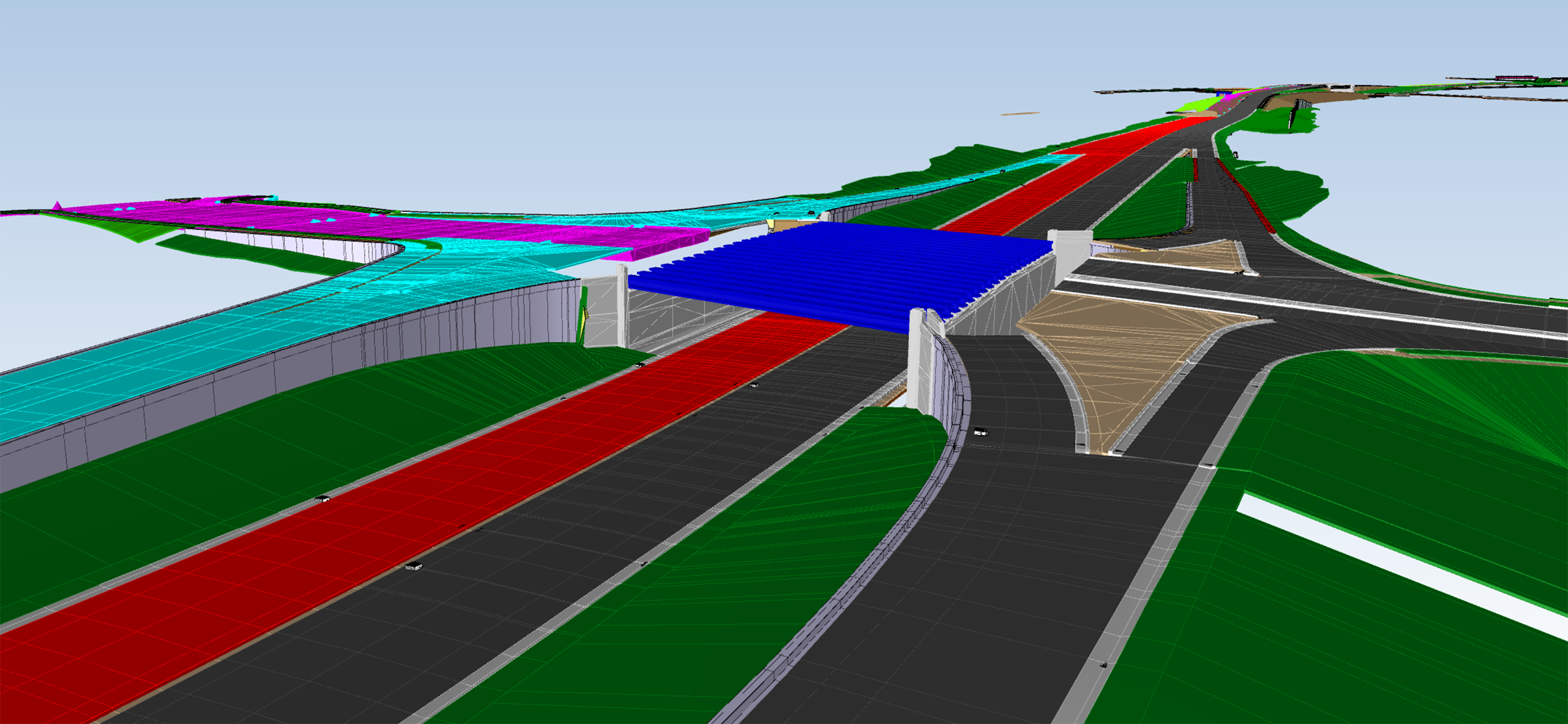
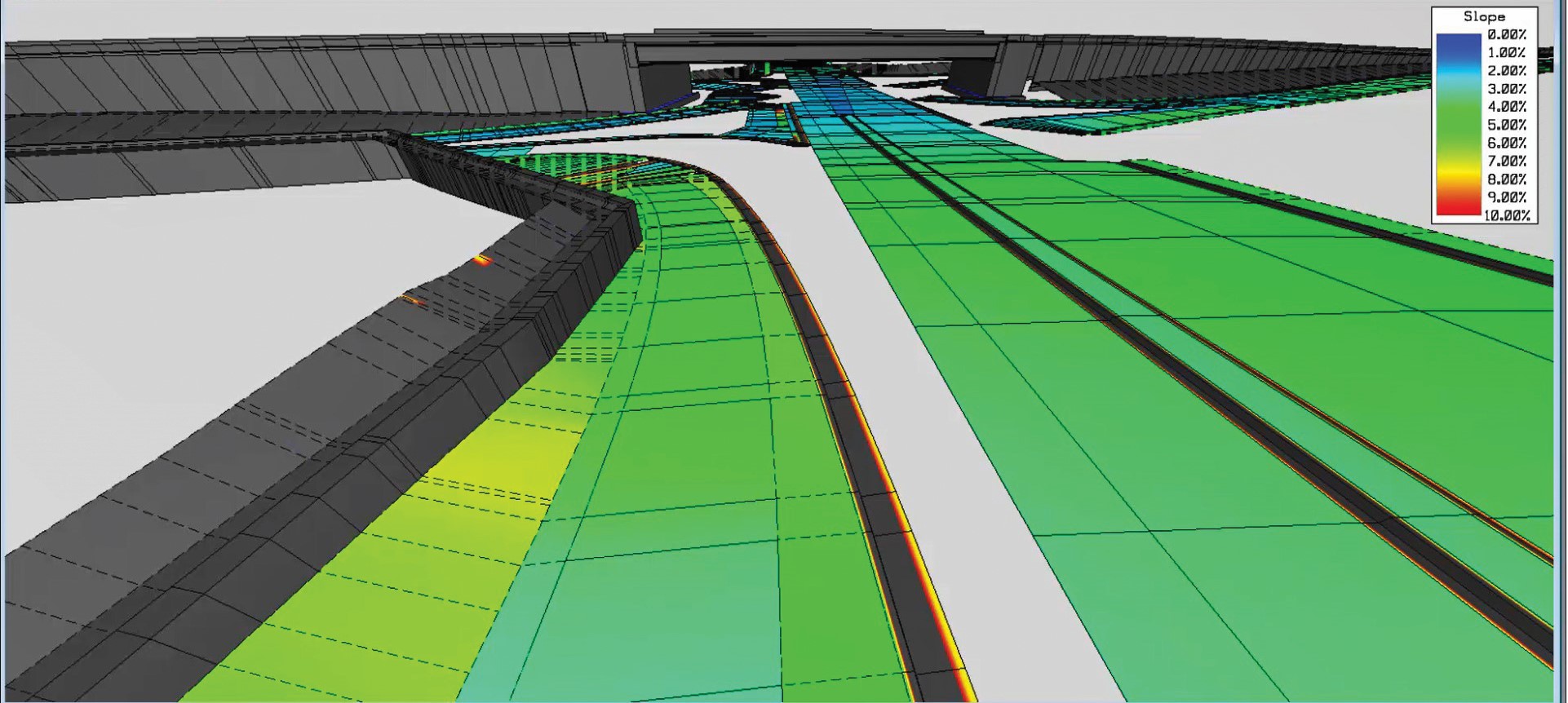
Model-centric design turns static visuals into dynamic, data-rich environments. Everything from utility crossings and drainage systems to street signs, sidewalks, and signals is modeled in one centralized, collaborative space. Real-time updates to design work in progress, schedule, cost, materials, and asset information ensure the data is always current and actionable. This level of integration allows project teams to anticipate and resolve issues early, improving decision-making and project outcomes. In addition, the ability to visualize potential conflicts in the design phase minimizes costly surprises during construction.

Enhanced Decision Making

The collaborative nature of model-centric workflows means every stakeholder can contribute to and benefit from a continuously enriched dataset. With access to accurate, up-to-date information, project managers and decision makers can respond to challenges with confidence. The result: projects that are completed on time, within budget, and to the highest quality standards. This proactive, data-driven approach not only enhances outcomes, but also builds stronger client relationships.

From Reactive to Predictive

Model-centric design and construction management is not just a trend; it is the future of the construction industry. By leveraging the power of integrated models and construction intelligence, teams move from reacting to problems to preventing them altogether. This evolution sets a benchmark for efficiency, risk management, and successful project delivery. As model-centric approaches continue to develop, partnering with teams who understand how to translate data into decisions is a valuable step forward for long-term project success.

picture of andy kaiyala

Andy Kaiyala is the Vice President of Digital Construction Management at WSB, based in Melissa, TX. With over 25 years of industry experience, Andy specializes in large, complex infrastructure projects in the transportation, civil, and transit sectors. Before joining WSB, he was the Vice President of Bid Development at The Lane Construction Corporation, where he led teams in securing construction projects worth over $5 billion. At WSB, Andy oversees the project controls team and supports the advancement of digital delivery in the contractor market across regions and divisions.

203.599.5984

February 17, 2025

Rod Myrick

Rod is the vice president of strategy and construction with over 26 years of experience as a professional engineer. Rod joined WSB through the acquisition of AE in February 2024. His background includes managing complex projects across federal, state and municipal levels. Rod’s extensive portfolio and close collaborations with the Florida Department of Transportation and Florida’s Turnpike Enterprise, has aided WSB’s expansion and presence across the Southeast region. Rod will continue building awareness and forging relationships as WSB continues to establish their presence.

What makes WSB different than other Architecture, Engineering, Construction (AEC) companies?

What makes WSB different is the individuals and talent within our teams nationwide. Our leadership team is deeply committed to enhancing both the professional and personal journeys of our staff every day. We believe their career growth is fundamental to our delivery of quality service and the retainment of staff.

As a solution-driven engineering firm within the AEC industry, we make impactful differences for our clients. This is made possible by our talented and qualified staff, who are central to our ability to continually provide innovative and valuable solutions.

What makes WSB suited to manage the growing needs of the Southeast region?

WSB is best suited to manage the growing Southeast region through our internal resources and innovative solutions. We bring new technology and a high level of expertise to the markets we serve. The Southeast region will benefit from WSB’s focus of identifying key talent to assist with the growth of communities.

What does the future of the Southeast region look like and how can WSB continue to support?

It is exciting to be able to cross-sell and introduce more services to the Southeast region. WSB provides over 50+ services that are new to the region and will be able to support the future of infrastructure for our current and new clients.  

Expanding our footprint is vital for the Southeast region and important for our own growth. As we enter new areas and enhance our expertise, we view the Southeast as an advancing market overflowing with opportunities. This expansion will further solidify our presence and impact.

What is your vision for WSB’s growth?

My vision for WSB is centered around a steadfast commitment to hiring the best staff to support our clients. I am focused on attracting the industry’s best talent, enabling us to expand our reach and effectively meet the growing demands across new regions. At the center of our vision is the empowerment of our team, who are essential in delivering innovative solutions and maintaining the high-quality service that defines WSB. By aligning our growth with these principles, we are dedicated to enhancing WSB’s impact on communities and industries nationwide.

What is one thing you wish people knew about WSB?

One thing I would like for people to know about WSB is all the great people we have on our teams. Across the nation we have staff who are passionate and authentic about the work they do. Additionally, WSB remains a focused engineering firm.

What are the biggest challenges and opportunities for WSB?

The acquisition of AE by WSB marked a significant change from our small company feel to a larger company structure. A challenge for WSB is preserving the close-knit company atmosphere and the camaraderie we have shown to our local communities.

An opportunity for WSB exists in continuing our national presence and becoming the go-to firm for our clients. With our expanded reach, we can identify and address the infrastructure needs across more regions, leveraging our unique brand and collaborative approach.  

You’ve worked in the AEC industry for many years, how has your experience informed how you approach your role at WSB?

How I approach my role is based on an understanding of listening rather than talking. I have learned that it is far better to listen than to talk. You gain more from listening to others than always inputting your thoughts. This was especially true when AE joined WSB.  I’ve spent a lot of time identifying key team members who can help our staff in the Southeast when we need support.  It’s these people who are helping us connect the dots as we grow our presence as WSB.

As vice president of strategy and construction how do you lead the groups you work with and what advice can you give to leaders now and those who come after you?

I lead groups through strategy which is crucial in our operations. Given the number of opportunities open to WSB it is important to understand we cannot pursue every one of them without risking burnout for our team. To avoid this, I focus on opportunities that align with our short-term and long-term goals. This approach further prevents exhaustion and ensures our efforts are made in impactful areas. I lead effective communication to drive our culture through transparency and learning.

Our commitment to staff is to support their goals by providing the necessary resources. To leaders after me understand that WSB has the ability to embrace creativity and entrepreneurship.

April 4, 2024

Last week, WSB announced a new partnership with 4M Analytics to advance infrastructure programs and projects with real-time utility data. Andy Kaiyala, VP of Digital Construction Management and Controls at WSB, and Joe Eberly, Vice President of Growth & Sales Strategy at 4M Analytics, recently addressed the benefits of the partnership and what it will mean for our clients and partners.

Q: What does this mean for the industry?

Andy: WSB continues to build out a comprehensive Digital Construction Management (DCM) offering to better serve our clients, and this partnership with 4M Analytics is another step forward. Every construction project must consider what lies beneath the ground. 4M is applying cutting edge technology to this significant problem, delivering the best data, and making it available faster than any other firm. This does not take the place of field investigation, but rather informs those investigations to be more precise and reliable.  Everyone wins in this. 

Joe: With utility risk as one of the primary challenges in the industry, the WSB/4M partnership advances the mitigation efforts to the earliest stages of the project planning lifecycle and at the lowest risk point. It also provides significant improvements in the time and cost of accessing utility records and data used in the early feasibility, coordination, pre-construction, and preliminary design processes on infrastructure projects.

Q: What does this mean for 4M’s clients?

Joe: The partnership will signal to the 4M Analytics client base that our utility data can have a much larger impact on their internal processes and create a vision for how the data can be used to support their project lifecycle workflows and development requirements.

Andy: Despite increased awareness and heightened attention, our industry continues to see an upward trend in utility strikes (Common Ground Alliance). These cost billions of dollars and most critically put people and lives at risk. Better information delivered timely across the life cycle of a project, from planning to construction, will help all parties mitigate this serious risk, deliver projects safely, on time, and on budget. This is what DCM is all about. Helping you be safe, deliver with the highest quality, and do so while protecting your bottom line and beating the schedule.

Q: How quickly will this partnership have an impact?

Joe: The partnership will have an immediate market impact and will increase our messaging efforts to support our clients and the industry more broadly and bring awareness that the conventional methods of construction delivery are no longer sustainable in a market where time and resources are becoming scarcer.

Andy: It already is. We are incorporating the 4M data into 3D models for constructability review, means and methods, risk analysis and mitigation, schedule review, design conflict resolution, and more.  We really are putting the design model to work, and how would you do that without the best subsurface data available quick enough to make a difference? Our position is that you can’t, and the sooner more owners and contractors begin deploying this solution, the better off the industry will be.

Q: How does this partnership work between the two companies?

Joe: The 4M partnership adds a layer of usability and value to the WSB DCM delivery model. Specifically, the ability to enhance the DCM 3D modeling services on the Bentley Platform. The result is a seamless delivery of data that can connect the office to the field, saving time and money along the way while reducing risk and improving decision making.

Andy: Through 4M advanced technology we can quickly and efficiently bring subsurface utility data into our digital representation of the future physical asset – into the digital twin. We then publish that data into SYNCHRO, leveraging another of our partnerships with powerhouse technology provider Bentley Systems, and start making better decisions. Seamless access to all the critical information you need to plan, design, bid, win, and build the work.

Q: Why is this happening now? Why this partnership?

Andy:  The time is now. We must work quickly to address utility conflict and coordination, one of the most significant risks in our industry. 4M brings the technology and the data, and our WSB team leverages that information to better deliver our projects safely, on time, on schedule, and with the quality WSB is known for. 

Joe: The scope and scale of the utility data challenge, and the inherent risk, have now been matched by 4M’s ability to apply its utility AI mapping technology at the same scale. 4M and WSB delivers reliable, real-time, and validated utility data for any project in the U.S. — right from your office.

Joe Eberly is the Vice President of Growth & Sales Strategy at 4M Analytics, Inc. and has more than 25 year’s experience in Construction Technology, serving the Public and Private Owner, Engineering and General Contractor markets. Prior to joining 4M, Joe served as the VP of Sales at e-Builder, a Capital Construction Management Software, which was acquired by Trimble in 2018. At Trimble, Joe was responsible for Sales, Account Management and Customer Success for the Owner & Public Sector and led the GTM launch for ProjectSight, a Project Management platform for General Contractors. Before entering the technology world, Joe was a Superintendent and Warranty Manager for a top-10 development company in the residential building market and owned a consulting firm focused on construction material management and value engineering services. Joe lives and works from Denver, Colorado and enjoys spending time with his grandkids.    

Andy Kaiyala is the Vice President of Digital Construction Management and Controls at WSB. With over 20 years of experience and an emphasis on large, complex, alternative delivery infrastructure projects in the transportation, heavy civil, flood control, and transit spaces, Andy brings a wealth of knowledge and expertise. At WSB, Andy leads the firm’s DCM initiative as the AEC industry is recognizing the value of digital delivery. Prior to joining WSB, Andy was responsible for domestic and international bidding and proposal efforts for Lane Construction Corporation. Andy’s career focus has been to deploy a full project life-cycle approach to business strategy that facilitates stakeholder involvement and achieves project schedule and delivery certainty. He currently works out of WSB’s Dallas office and guides clients through a process that mitigates risk and reduces conflict for all stakeholders.

December 7, 2023
By Andy Kaiyala | VP of Construction Technologies and Controls, TX, WSB

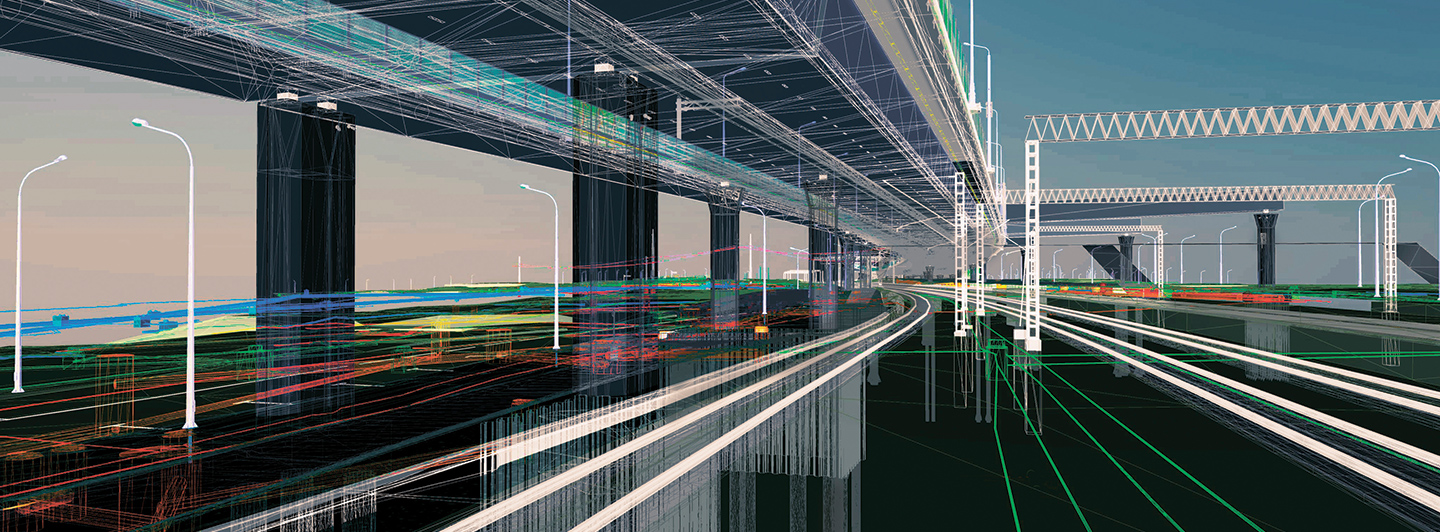
In an ever-evolving construction industry, Digital Construction Management (DCM) is the future of our industry. Utilizing cloud-based connected data environments that visualize the physical world in an interactive digital space is the next step to advance civil construction project delivery. This undertaking will produce accurate 3D models that become the single source of truth for project delivery, with each stakeholder building upon the work of the previous.

Simply put, this is the future of civil infrastructure and WSB is at the forefront with our DCM service.

Defining Digital Construction Management
Digital Construction Management represents a paradigm shift. At its core, DCM is the fusion of advanced technology and traditional construction practices that allows all stakeholders to evaluate the same data and make smart decisions.

The shift from 2D to 3D workflows will not occur overnight, but we recognize the value of 3D modeling and its ability to provide a more comprehensive and intuitive view of a construction project. 3D models enable stakeholders to visualize the project in its entirety. Where are utility clashes? Where are the trouble spots that need to be addressed? How will shifting elements of a project play out in the real world?

DCM has far-reaching implications for every stage of a construction project, from design to execution.

Unparalleled Problem Solving
Every project comes with risk, but DCM helps create the opportunity to take risk from an abstract concept to a concrete reality so challenges can be solved efficiently. When the proposed design is analyzed in context of a full existing-conditions model, problems are identified early, risk is mitigated and projects are ultimately more efficient and cost-effective.

Putting the Design Model to Work
WSB is excited about DCM because it is the intersection between services and software, and what is next for our industry. WSB provides both cutting-edge software tools and the expertise to use them effectively. DCM enhances our clients’ capabilities, allowing them to integrate operational data within one platform from the very earliest stages of the project through construction close out.

WSB’s in-house DCM expertise spans construction modeling, visualization, design modeling, 4D scheduling, data analytics, project controls, IT development resources, constructability review and automated machine control. This holistic approach ensures that every facet of the project benefits from DCM.

Preparing for the 3D Future
WSB’s approach to Digital Construction Management is about meeting clients where they are today while preparing them for the future.

The future of construction is digital, and our DCM services are empowering clients to make informed decisions while fostering collaboration, utilizing data intelligently and mitigating risks.

The digital future is here, and WSB is leading the way.

Andy is Vice President of Construction Technologies and Controls with over 25 years of industry experience and emphasis on large, complex, alternative delivery infrastructure projects in the transportation, heavy civil, flood control, and transit spaces. Andy has led teams that secured construction projects with a contract value of more than $5B in nine states and three countries.

[email protected] | 203.599.5984

picture of andy kaiyala

By Kelsey Peterson, Graduate Engineer, WSB

4D/5D modeling is intended to improve the accuracy and efficiency of projects. It has applications throughout the project life-cycle, from preliminary design to project close-out with the contractor. Learn more about some of the ways incorporating into your project and improve your projects overall success.

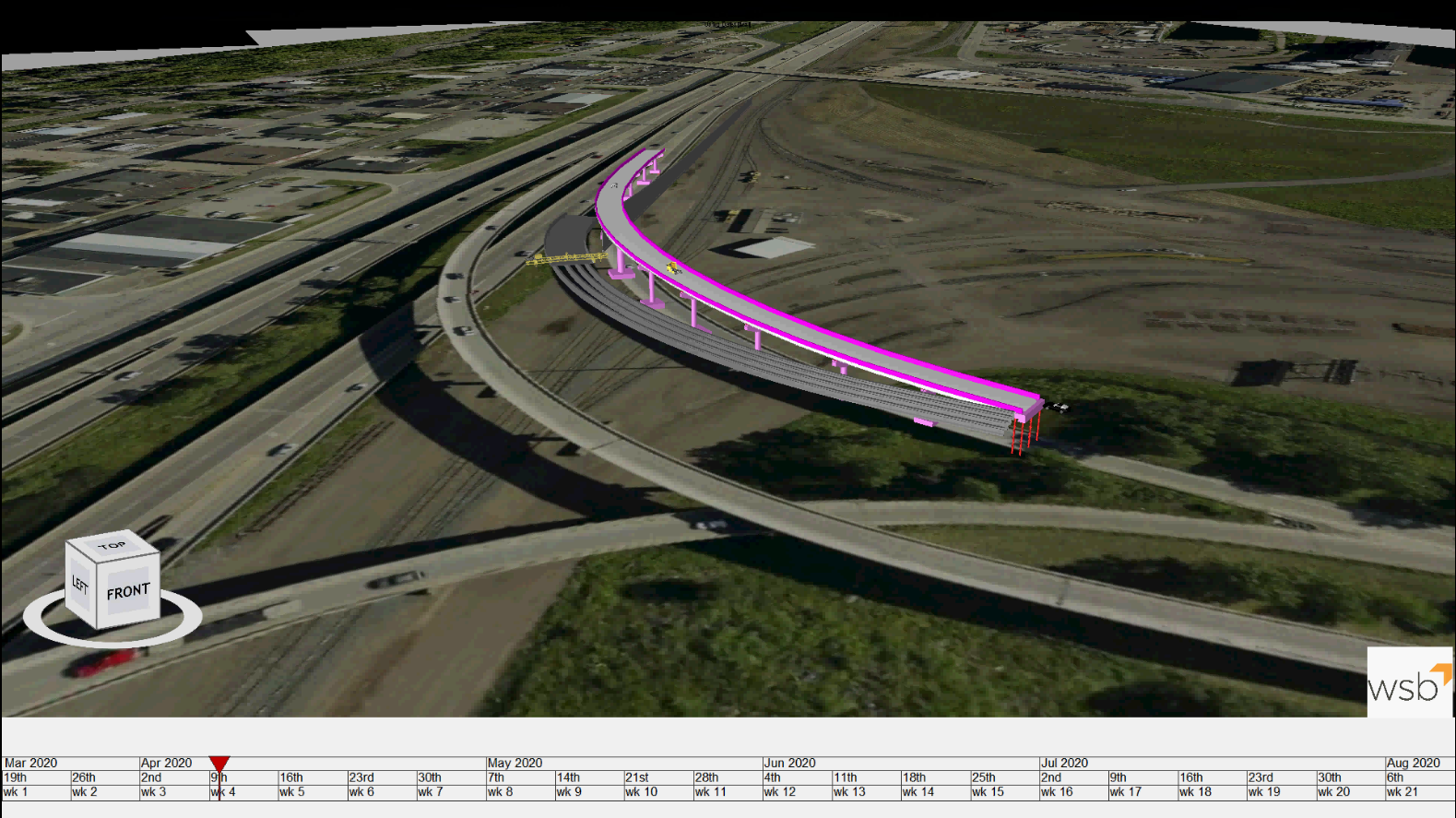
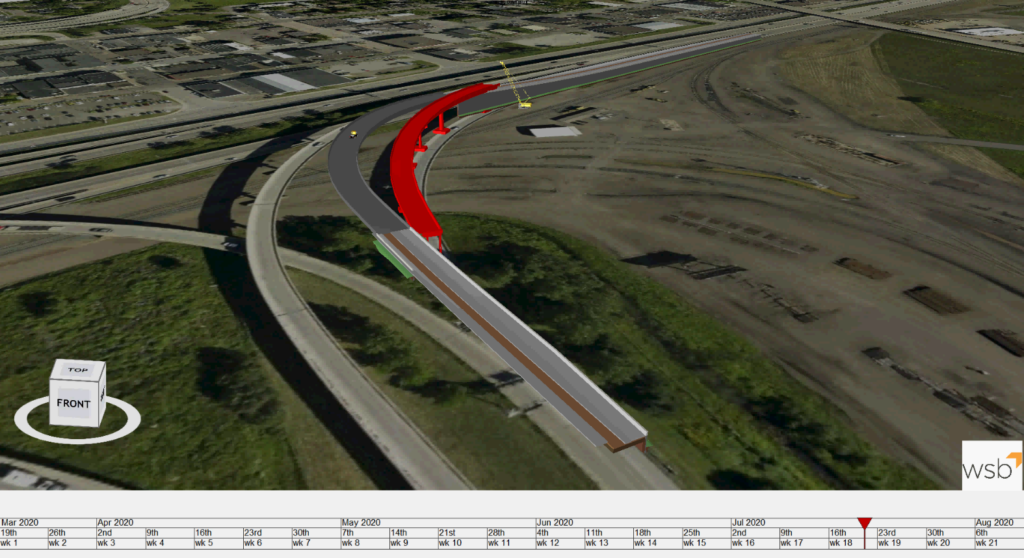
4D models help mitigate project risk by visualizing project conflicts that are not easily identified in traditional Gantt style bar charts. A 3D model linked to a project schedule provides the project team the opportunity to identify and mitigate project staging, utility, and discipline conflicts by providing a visual of how construction will play out as a function of time. It also provides a visual of project opportunities, allowing the project team to reschedule activities that may be better sequenced to reduce construction delays and cost, as well as redesign the 3D model to include missing design elements that would otherwise delay construction. Project time and cost savings are the direct result of using the 4D model to identify and mitigate project risks early on in construction.

The 4D/5D models provide a level of transparency that encourages coordination between project team members, creating team accountability through clear vision of project construction. The 4D/5D model is used to bring project conflicts to the surface and create the opportunity for project team members (owner, contractor, engineer, and project stakeholders) to resolve challenges in a collaborative environment.

4D/5D modeling enhances project coordination by allowing new project team members and stakeholders be brought up to speed quickly on the design and staging of the project. This greatly enhances project communication relative to the use of a traditional Gantt style activity chart. It also provides the opportunity for developing staff to become familiar with a project that may, historically, have been easier for a more senior staff member to visualize. The 4D/5D model allows the project team to develop and review a safety plan visually and highlight construction activities where accidents and risks can be reduced prior to the activity occurring on the project.

By incorporating 4D/5D modeling, your projects will run more smoothly and efficiently. It allows you to mitigate risk though the application of a timeline to the overall plan creating greater vision and improve efficiency by encouraging team work and increasing overall project vision. Contact us for more information how modeling can be applied to your projects.

Kelsey, a graduate engineer with WSB, successfully balances the needs of different modal users, property owners, and environmental constraints. She is known for her attention to detail and innovative solutions to complex designs.

[email protected] | 612.709.4897

WSB Staff working in the lobby of the WSB headquarters.

Discover Our Difference

We partner with our clients and communities to build what’s next in infrastructure – the places, spaces, and systems that support our lives.