By Christopher Kester, Sr Estimator, WSB

A constructability review is a useful project management tool that allows a client to “think like a contractor” throughout the design phase of a project. Looking at the buildability of a project, problem-solving cost, and risk in design has numerous benefits, providing clarity for both owners and contractors.

It is especially valuable to projects that have a higher degree of variability, whether in scope, size, location, subsurface conditions, schedule, or material shortages. Reviews consider the unique variables of every project and help better inform an owner of cost and risk, giving them the tools to make the best decisions possible for their individual needs.

Why include constructability review in your project planning? Here are five reasons why it adds value.

Greater Accuracy in Estimating Cost

It’s no mystery to anyone in the construction industry that right now costs are volatile. Whether it’s the price of oil, materials, or supply chain woes, estimating cost as accurately as possible and finding cost savings is critical.

Average prices are often used in our industry to estimate the cost of a project, but these baseline costs are relied upon too often – creating greater risk and opportunities for sizable miscalculation. Just think about the cost of materials and labor in 2021 for a project, and how much those costs have jumped in just one calendar year. Using data that could be as much as 15 months old, in a volatile market, and the significant variability of costs depending on the uniqueness of a project, shows the value of a constructability review and how it goes hand-in-hand with cost estimation.

Mitigating Risk

A constructability review provides value throughout the project’s design iterations from initial concept to final design. Every project involves risk, but the proper feedback during a constructability review can provide information to help the owner/designer better define scope and adjust their design plans and specifications as needed before the bidding process even begins. This allows contractors to better understand what to bid and how they will get paid, reducing their risk.

For example, think about how a contractor might approach a bid for a street reconstruction with no geotechnical report, and therefore not know the subbase conditions or how much pavement and base will need to be removed. That is a risk to the contractor, so they may bid higher to cover that risk. There is also a risk that unsuitable material is found once construction begins, which will increase the price of the work and potentially the schedule of the project. Understand, the contract documents how a contractor gets paid, and any uncertainty will increase pricing.

Mitigating risks should not be seen only as a means to reduce threats, but also as a way to identify opportunities to create positive outcomes. It is essential to analyze and monitor identified risks that could both positively or negatively impact the overall outcome of project. This aspect of a constructability review helps with building a mature risk register and determining evaluation practices to identify threats and opportunities appropriately.

Measure the Risk

Some risks cannot be mitigated or avoided, and a constructability review helps to identify them. The risk is thereby accepted and can be measured and calculated, along with the probability of it occurring

Furthermore, using the Monte Carlo simulation techniques and (PERT) Program Evaluation and Review Technique method to analyze the risks provides precise statistical results that accounts for thousands of potential outcomes. Utilizing these techniques to evaluate budget and schedule risk assists with improving predictability, provides guidance for effective monitor and control practices, and improves the ability to eliminate probable failures or reworks during execution.

Refining Design & Realizing Value Before Construction

Because a constructability review can be used throughout design stages, projects can identify constructability and payment issues before the bidding process which is more time and cost efficient than addressing them in the field with a contractor. Are you using a certain kind of pipe when a less expensive alternative could be substituted? Do your specifications leave a quantity up to each contractor to estimate and bid incidental or lump sum? These types of issues are easy to address throughout the design stages to save headaches down the road.

Especially for government and public entities – if bids come in higher than what was budgeted for, going back to the design process and rebidding will delay construction and add money and time to the project.

Tailoring Constructability Review to the Project

Perhaps most important is that a constructability review is scalable and can be adapted into any project. Whether it’s a high-level, one hour review into a focused risk or a deep dive in every stage of design, owners can integrate a constructability review plan that is tailored to meet their needs. Thinking like a contractor allows the owner to better understand the likely range of project costs before the bidding process begins and to improve the biddability of their plans by reducing the uncertainty for the contractor.

Chris spent most of his career with a regional construction company where he prepared production-based estimates in excess of $300 million annually, many of those being DOT or State-Aid. He provides the ability to analyze from the perspective of a contractor and assemble a contractor-style estimate while identifying, analyzing, and mitigating risks.

[email protected] | 651.492.3853

By Bob Barth, Director of Land Development, WSB

From inception to completion of a project, having an expert walk alongside you can make all the difference. An owner’s representative, often seen as a significant value in private sector projects, can and should be used for public projects to add value as well.

What is an Owner’s Representative?

An owner’s representative is essentially the eyes and ears of a project – representing the owner, investor, or developer throughout a project. A deep understanding of the overall goals of the project, as well as having an in-depth knowledge of engineering and construction, means this person is an advocate and champion that can ensure a project goes according to plan, while helping to mitigate risk.  

Given the proven value of the service, it is curious that public sector vertical construction has traditionally underutilized the owner’s representative in favor of project leadership from the lead architect or general contractor. So why should the public sector use an owner’s representative?

They help keep projects on track and on budget.

The more expensive the project, the more the architect and contractor get paid. Though obvious, this fundamental conflict creates competing incentives for both the architect and contractor. The owner representative’s compensation, in contrast, is often determined by the original project budget and does not subsequently increase or decrease as the project budget increases or decreases. Their job is to act on behalf of the owner, keep the budget on track, and represent the overall financial interests of the project.

Owner’s representatives see the big picture.

Public project financing is very different from private project funding. Public sector projects are often financed through bonding, and operating budgets serve as a proxy for revenues. Cost needs to be managed throughout a project’s duration, as do relationships. An effective owner’s representative does this.

Additionally, the project schedule is more complex than the design schedule kept by the architect, or the construction schedule managed by the contractor. The project schedule includes time building stakeholder consensus, conducting preliminary environmental and property investigations, aligning financing, and developing project parameters. These activities often precede the architect’s involvement and need to be managed by someone with a wider perspective on the project – the owner’s representative. The project schedule also includes post-construction activities such as commissioning, grant close-out, sustainability certification, occupancy, and logistics. These are not activities contractors can effectively manage but, rather, activities that the owner’s representative expects to manage.

They simplify decision-making and mitigate risk.

Finally, well-structured projects allow the owner’s representative to lead in all aspects of a project, empowering them to make decisions over contractors, architects, and other consultants. Effective owner’s representatives also build consensus among teams and stakeholders. All of this brings critical leadership and certainty to projects.

When unexpected change orders, cost overruns, unforeseen environmental and property issues, or other problems arise, a good owner’s representative help manage and mitigate risk. 

In summary, owner’s representatives bring expertise, leadership, and credibility projects. Given their value, they should be utilized in more public projects.

Bob has over 20-years of experience providing technical and management support to public and private clients. In addition to leading our Land Development Group, Bob is also responsible for our Commercial Market Sector, delivering a wide-range of services to industrial, institutional, property management, and construction clients.

[email protected] | 763.231.4876

By Michael Rief, Sr Vice President of Construction, WSB

The supply chain is tightly integrated, and when one part of the supply chain faces issues, it can have a domino effect. For those working in construction, supply chain problems have caused project delays, a long wait for and lack of key materials, and frustration over the past year. Unfortunately, it shows no signs of improving in 2022.

With a shortage of labor, shipping delays, and trouble getting materials, we should prepare for our recovery to take longer than many people anticipated. As our industry continues to tackle supply chain problems, there are things construction teams can do to anticipate, innovate, and adapt to the current situation.

Be Flexible Where You Can

Flexibility is key to adapting to supply chain uncertainties. While many contracts require specific materials, if clients and contractors can build some flexibility into the contract to use alternative materials, it’s more likely that a project will be completed on time or without significant delays.

For example, some of WSB’s transportation contracts require a certain kind of seed mix, but those seed mixes may not be available for many months or at all into the foreseeable future. Allowing a substitution that is available and still meets the needs of the project allows us to finish the job sooner and more efficiently.

Consider Buying Hard to Procure Items Sooner

This applies to both construction teams and clients.

If municipalities are planning a project where they know they will need to procure certain items that may be hard to come by, doing so early and paying to store it may be more efficient in the long run and ensure your project won’t face unnecessary delays. Similarly, some contractors are procuring high-risk items and pre-purchasing material for clients, working in storage cost to help prevent delays.

Additionally, as more contractors buy materials in advance, they sometimes find they need to move materials around to different projects that face more critical needs or that have tighter timelines. Being flexible when possible can benefit both contractors and clients.

Manage Risk

With every project, it’s important to manage risk. If cities or contractors purchase hard to procure materials in advance or in bulk, and then find the value goes down in a year, they could be stuck paying to store a material that is worth less than what they paid for it. Each will have to make decisions that work best for their needs and anticipated projects.

Furthermore, building risk management into contracts can be helpful. Whether it’s procurement of materials or more flexibility on timing of projects, thoughtful contract terms can help both cities and contractors, mitigating some risk.

A great example of mitigated risk in many current construction contracts is a provision for fuel cost escalation. If the cost of fuel goes up significantly after a contract is signed, a client may pay more to cover fuel costs. Similarly, if it goes down significantly after a contract is signed, a client may recoup some of those savings. Thinking about how contracts can offer more flexibility in ways that adjust to supply chain and labor issues is something that could offer substantial benefit to all parties.

Since supply chain issues, labor shortages, shipping slowdowns, and numerous other factors are expected to continue creating challenges for the construction industry over the next year, innovation, flexibility, and adaptability can help keep projects moving forward for clients and contractors.

Michael Rief

Mike has nearly 30 years of experience in civil engineering, with an emphasis on pavements and materials, pavement management, quality management, project management, design, risk assessment, project controls, contract administration, construction, preventive maintenance, planning, education, and technical team supervision. Mike has managed several complex, high-profile projects throughout Minnesota.

[email protected] | 612.518.829

By Paul Kivisto, P.E., Senior Structural Engineer, WSB

Did you know that the average life span of a bridge is 60 – 70 years? There are a number of ways to reach or exceed that average. Newer materials like high performance concrete and epoxy/stainless steel rebars certainly improve the quality and longevity of a bridge. Regular bridge inspections are not only legally required, but by inspecting and documenting issues with your bridges you can hopefully slow the expected deterioration and make repairs early which often costs less.

MnDOT, counties, cities, townships, and tribal governments are all responsible for managing bridge assets within their jurisdiction. Many of these entities have inspectors on staff to perform inspections, while others contract out that work to private firms like WSB. Maintaining regular and accurate inspection data is necessary to ensure public safety, reduce liability, maintain accurate budgeting, and comply with state laws and regulations.

Five important aspects of bridge inspections

About Documents, Frequency, and Inspection process

MnDOT releases the Bridge and Structure Inspection Program Manual (BSIPM) which summarizes inspection guidelines. In Minnesota, all bridges and culverts over 10’ long and carry traffic or are over roadways must be inspected. An initial inspection is required within 3 months of opening to traffic. The typical inspection frequency is 24 months, with shorter time periods for bridges in poor condition. The bridge owner can request longer than 24-month cycle for culverts. The latest version is May 2021 and can be viewed here: https://www.dot.state.mn.us/bridge/inspection.html.  

Bridge Condition Codes

BSIPM Chapter B – Bridge Inspection Field Manual and Chapter D – Recording and Coding Guide should be used by inspectors during all inspections. Physical condition and geometric properties of each bridge are recorded on inspection and inventory forms.

  • Overall condition codes from the National Bridge Inventory (NBI) range from 9 (new) to 0 (closed) and track the overall condition of the superstructure, substructure, deck, culvert, and other elements.
  • More detailed element level inspections record percentages of elements in conditions ranging from 1 (new) to 4 (severe deterioration).

The owner must report inspection and inventory data through the Structure Information Management System (SIMS) database to MnDOT every year.  MnDOT in turn provides the data to the Federal Highway Administration (FHWA).

Channel Inspections/Waterway/Scour

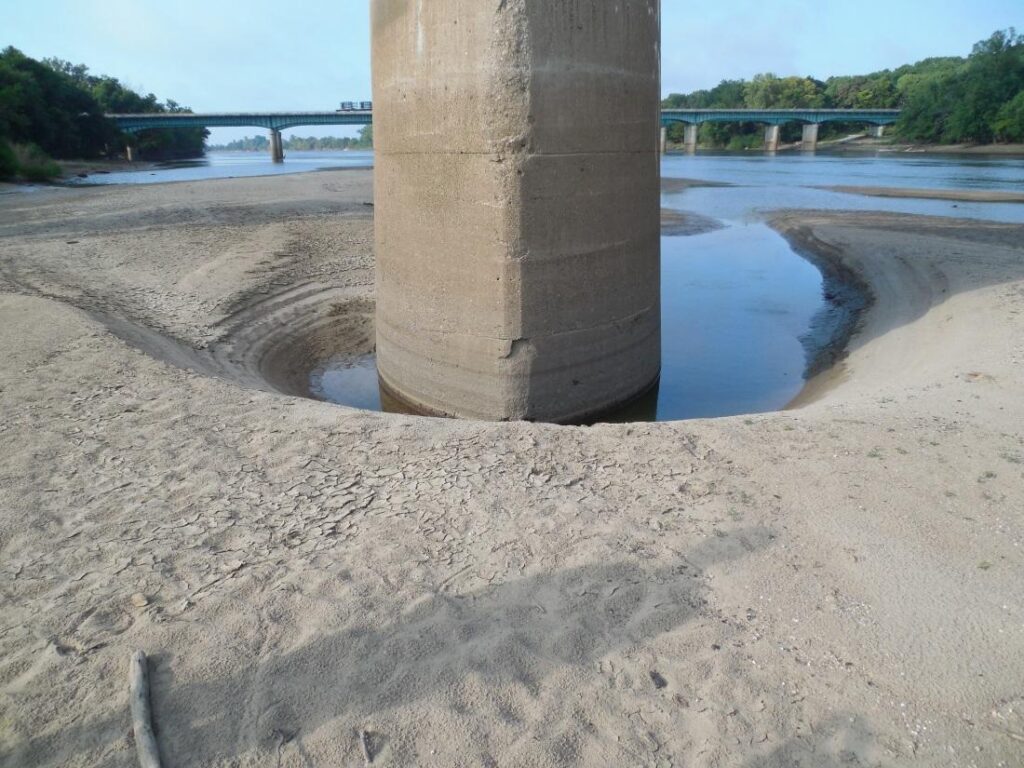
One of the leading causes of bridge failures is scour or undermining of the substructures in, or adjacent to, water. Scour is the term used to describe the erosion of soil surrounding a bridge’s foundation. When fast-moving water moves sediment from around the foundation, it creates scour holes adjacent to substructures that must be identified and monitored. Degradation of channels can cause shifts in the channel and may increase the risk of undermining. Bridges that cannot be inspected by wading and probing must be included in the statewide underwater inspection program on a 48-month cycle. Channel cross-sections are required for scour critical bridges and recommended for unknown foundations and scour susceptible bridges.

Additional causes of bridge deterioration to be aware of include:

  • Rebar and steel corrosion due to chlorides
  • Delamination and spalling on concrete members
  • Shrinkage cracking in concrete
  • Fatigue cracking on steel beams
  • Vehicle impacts to members
  • Leaking expansion joints
  • Bearings moved out of position
  • Timber decay

Drone Inspections

Increasingly, drones are used to provide access to hard-to-reach portions of bridges. They have photographic and video capabilities that allow them to identify cracking, spalling, and other deterioration that is otherwise challenging to document. Drones have the additional benefit of using Infrared (IR) cameras to identify delamination and distress below the surface.

Engaging with the Inspection Data

Agencies should use inspection data to help identify maintenance, preservation, improvement, and replacement projects. It is critical that accurate inspection data be maintained to track deterioration over time and prioritize maintenance work. Additional detailed inspections may be needed to help put together a system-wide scoping analysis or bridge management plan (BMP).  A thorough BMP can help identify funding needs over a given budgetary cycle.

Paul has more than 36 years of experience in bridge construction, bridge management, bridge inspection, and bridge design. In his role as Metro Region Bridge Construction Engineer for MnDOT’s Bridge Office, Paul was responsible for writing foundation recommendations, bridge preservation and improvement recommendations, constructability reviews, recommended repairs, and identified projects for inclusion in MnDOT’s bridge preservation program.

[email protected] | 612.201.9163

The multi-dimensional designs are for the Highway 169 Redefine – Elk River project

Engineering and consulting firm WSB announced today that they will deliver the first set of fully digital paperless design plans to the Minnesota Department of Transportation (MnDOT).  The paperless plans will be delivered later this summer for the Highway 169 Redefine – Elk River project.

“The 3D Design Model has allowed us to see the design in a whole new light. We are able see design changes on the fly that provides MnDOT with greater flexibility in the decision-making process,” said MnDOT’s Darren Nelson, Highway 169 Redefine – Elk River project manager.

Historically, the Architecture Engineering Construction (AEC) industry has been paper-heavy with many DOTs across the nation still requiring traditional plans. The transition to paperless is impacting the entire AEC industry, including DOTs, general contractors and civil engineers.

For the project, WSB advanced the methods and procedures used to implement a Building Information Modeling (BIM) design approach. The approach will result in improved project cost, better risk management and improved quality. The BIM model is built from available data and is highly accurate. The model creates a seamless workflow from design through construction and will import information to the field digitally resulting in efficiencies and better communication.  Once construction is complete, the project is left with an as-built, accurate model that can be used for asset management in the future.

“As engineers, we are motivated by the opportunities to design infrastructure projects that support our communities and this project is no exception,” said Jon Chiglo, WSB’s chief operating officer. “It’s very rewarding to partner with MnDOT to shape the way our entire industry will deliver projects. Based on the benefits, digital delivery is the future and it’s exciting that WSB is leading these efforts.”

To date, the combination of the 3D BIM Model, 4D Model and 5D Cost Structure within a digital design environment has led to many cost savings and benefits even before construction has begun. The true, virtual representation of what will be built has allowed stakeholders to easily review the project impacts.

MnDOT received special funding to convert Highway 169 from the Mississippi River to 197th Ave. to a freeway system through Elk River. The project will convert four at-grade intersections into interchanges and will modify the access of the Highway 169 and Highway 10 interchange. WSB is responsible for delivering the final design.

By Nate Osterberg, Pipeline Inspector, WSB

Effective January 14, 2021, the Colorado Department of Transportation (CDOT) will mandate that all new permitted utility installations meet Digital As-Constructed Requirements (DAC) in accordance with the Utility Accommodation Code Rule 3.3.4.6.2.  New requirements under State Highway Accommodation Code, 2 CCR 601-18, Rule 3.3.4.6.2 Digital As-Constructed Requirements, Plan and Profile 3.3.4.3 mandate uniformity in utility mapping, as-builts and plan-and-profile submissions. Utility permits will begin stipulating this requirement soon.  Additionally, there are new Plan and Profile requirements for all Horizontal Directional Drilling (HDD) operations within CDOT’s Right of Way.

But what does this mean?

Essentially, this means that anyone working within CDOT’s Right of Way must perform a digital utility locate survey for any underground utilities – commonly known as Subsurface Utility Engineering (SUE).  The survey must be submitted using their chosen software. 

What is SUE?

SUE is an engineering practice used to obtain reliable underground utility information. Accurate and successful SUE practices benefit contractors, transportation departments and utility companies by limited the need for unnecessary utility relocations, avoiding unexpected conflicts and enhancing safety.

How do I do this digitally?

You combine the right tools with the right expertise. The digital world of 3D modeling can be intimidating, but a digital approach is actually more accurate, efficient and safe. Using mobile mapping software, utilities can be captured, recorded and displayed precisely accurately and seamlessly. 

Learn more about our complete Pipeline services or Utility Mapping and how to prepare for upcoming requirements.

Nate Osterberg has over 12 years of experience in the utility industry and specializes in utility inspection for WSB’s Pipeline group. Nate’s expertise lies in managing inspection staff technology implementation, scheduling and quality control in addition to CFR 192/195 inspection, damage prevention and GIS-based web mapping.

[email protected] | 612.202.2997

Nate Osterberg

By Do Nam, Sr. Traffic Operations Engineer, WSB

Construction operations on roadways disrupt normal traffic flow and generate undesirable delay. As traffic continues to increase throughout many metro areas, the Federal Highway Administration has been encouraging DOTs to be more proactive in their maintenance of traffic during construction. 

Good construction staging provides safe and efficient traffic operations throughout a project to minimize impacts on the community during construction. WSB has begun development of traffic models that simulate the flow of traffic under different staging scenarios. These traffic simulation models consider all available routes, how construction will impact these routes and how much additional time this will add for commuters. These models are being used to determine if there are improvements that need to be made on any surrounding routes to allow for better operations throughout construction.

This new approach is more proactive than past construction staging methods and is based upon data. By modeling actual construction conditions, we’re able to pinpoint where potential challenges may occur during construction and how to avoid them. Below is a list of potential benefits of construction staging and maintenance of traffic modeling using traffic simulation.

The benefits of advanced traffic simulation for construction staging and maintenance of traffic

  1. By understanding what the impacts to the community are, we can be more proactive in mitigating them.
  2. If we better understand what routes traffic will use, we can ensure that traffic controls are set up to accommodate additional traffic volumes.
  3. Limit changes can be evaluated.
  4. Informs decisions on critical maintenance items.
  5. Provides a public engagement tool for cities and residents.

Through advanced traffic simulation technology, we’ve been able to enhance construction staging plans resulting in better projects.

Do has been a civil engineer in the transportation field for over 25 years. His experience includes modeling, operational analysis, design and Intelligent Transportation Systems (ITS) of large-scale transportation projects in both the United States and Qatar. Do has successfully managed over 30 major transportation and research projects utilizing traditional macroscopic travel demand forecasting modeling and state-of-the-art microscopic traffic simulation modeling techniques.

[email protected] | 763.760.8090

By Paul Kyle, Project Engineer, WSB

Construction projects are complicated and include many moving parts. One way to help assure a project’s success, is to engage in a constructability review early in the design phase of a project to make sure all those moving parts are working together as efficiently as possible. These reviews give a second set of eyes to examine your project’s plans and specifications to address areas of risk, identify areas for cost savings, and reduce claims during construction with minimal additional cost or turnaround time. Having an experienced professional provide independent review and suggestions from the viewpoint of a contractor bidding on the project can result in more bidders, better and more competitive pricing, as well as a high-quality and less risky bidding and construction experience.

However, constructability reviews can often become superficial and ineffective due to a lack of understanding of the process, improper implementation, and limited resources. By better understanding the process, the odds of success increase. Below is a list of 5 ways a constructability review can impact a project.

Knowledge of Construction Means and Methods

Effective constructability reviews begin with an in-depth evaluation using knowledge of standard construction methods, materials, and techniques so a project can be analyzed from a construction or field standpoint. Reviewing a project from this perspective evaluates things like the equipment needed to complete the work, environmental or spatial constraints, and installation procedures for the materials being used. Considering these items results in fewer issues during construction and fewer changes in scope.

Understanding of Contract Documents, Specifications, and Special Provisions

Providing a constructable project with transparent and well-defined expectations in the plans and specifications increases the likelihood of more potential bidders on the contract. Clarity in these project documents and specifications supports a clear approach to the project allowing contractors to provide more competitive and accurate bids.

Discipline-Specific Expertise and Resources

Discipline-specific knowledge and resources eliminate the potential for missed or overlooked details resulting in delays or open-ended contract requirements. Expert understanding of specific materials, practices, and specifications leads to an efficiently planned construction project that will stand the test of time.

Understanding of Contractor Scheduling and Bid Methods

Understanding contractor production rates and bid methods reduces the risk of project delays, missed completion dates, and uncertainty in bidding. Knowing how to accurately predict the contractor’s approach, sequencing of work, and bid methods will result in reduction of claims, change orders, and non-competitive or high bidding. Thus, increasing the overall likelihood of an on-time and on-budget completion of the project.

Delivering Intended Project Scope

The goals and purpose of a project often have significant influence over the design process but can sometimes be lost in the transition between design and construction. Incorporating construction specific personnel into the design process ensures the project’s original objectives are integrated into the plans and maintained during construction.

Paul has nine years of experience in construction services and is MnDOT certified in several disciplines. His expertise includes project management, quality engineer, project design, construction inspection, contract administration, record documentation, and materials testing. Paul’s experience as a contract administrator and quality assurance make him a valuable asset to any project.

[email protected] | 612.360.1310

By Eric Breitsprecher, Project Manager, WSB

Construction inspection is essential for successful project delivery. Whether it’s reviewing project specifications on-site or documenting changes to an existing plan, inspection is necessary to meet industry standards for accuracy, quality and to keep construction work on time and within budget.

Here are five reasons to consider construction services on your next project.

Successful delivery is in the details. Reviewing the contract closely and building out the approved project scope ensures each deliverable is accurately executed for the client. Detailed record keeping and photo documentation is important to ensuring a project is delivered to client standards.

Real-time inspections and instant information sharing. Monitoring project information from the field through real-time data collection provides enhanced reporting, faster processing and improved data management. Cutting-edge tools allow for real-time solutions that minimize risk to both clients and the general public. Quick information sharing and communication between the owner and contractor can be critical in addressing urgent problems.

Infrastructure is built to last. Building a strong framework is important for any project. Quality designs support and build safer communities. Throughout the design and constructability review process, quality construction inspection keeps projects on time and on budget.

Avoid future maintenance costs. Construction inspectors oversee the work and are responsible for anticipating risk, communicating with the contractor and documenting progress and possible construction or design issues for the owner.

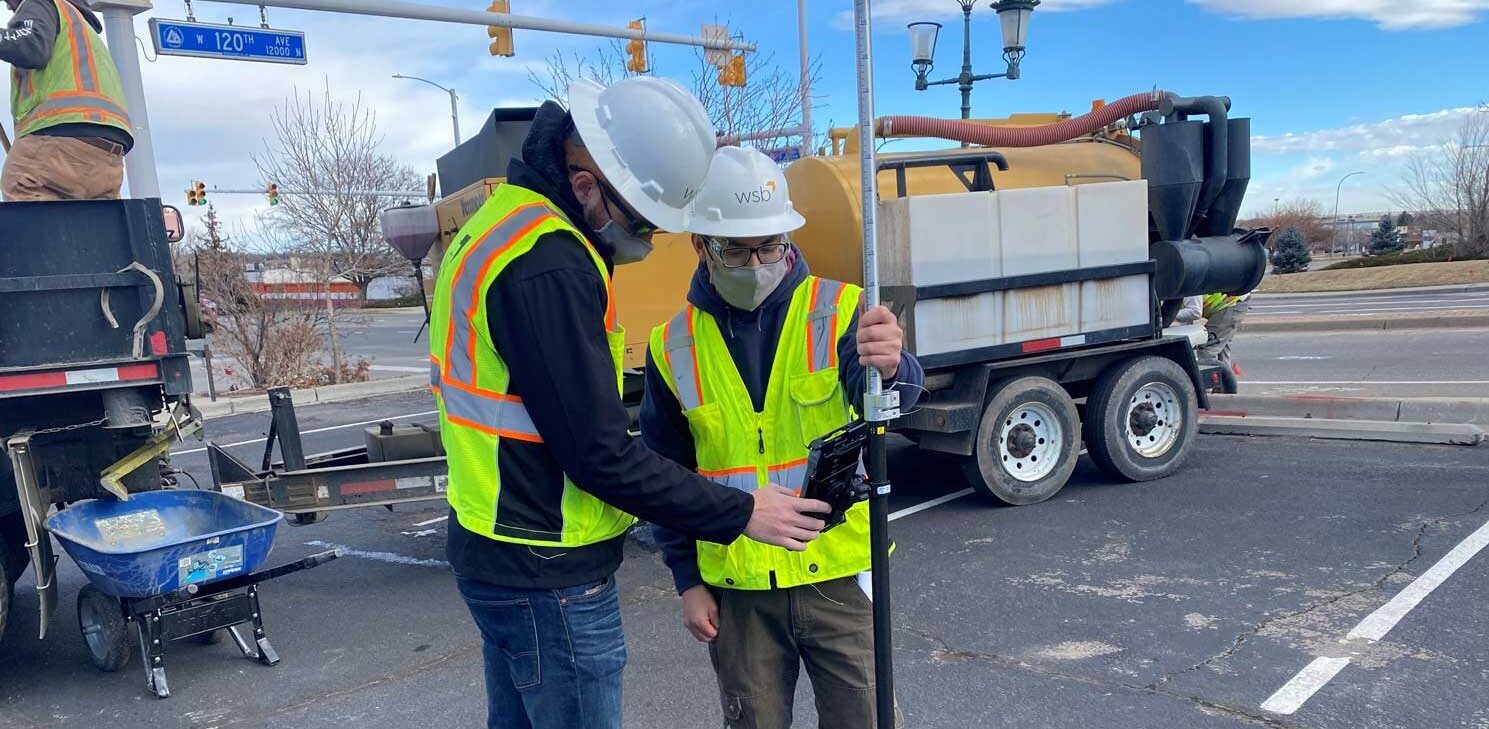
Streamline inspection processes with GPS Rover. GPS Rover technology can be applied to improve efficiencies and track site coordinates and measurements for any project. By using GPS technology to track quantities, inconsistencies are reduced by transferring recorded field data and displaying on auto-generated plan sheets.

Eric has over 25 years of experience in road and bridge construction contract administration including quality management of bid-build and design-build projects over the past 18 years at MnDOT. He is certified in MnDOT, ACI, and University of Minnesota disciplines including bridge and ADA construction, and erosion control site management. He has managed several types of construction projects for MnDOT and various counties, most notably the 35W bridge replacement project. His commitment to bring all parties into a collective partnering atmosphere has provided resolutions to conflicts and project issues at a great reduction in project delays.

[email protected] | 507.601.7738

By Zach Kolsum, Environmental Compliance Specialist, WSB

Conducting inspections on infrastructure projects can be daunting, especially when they require extensive reporting and legwork to comply with local, state and federal regulations. Fortunately, there are technological tools available to assist environmental compliance and construction inspection, which streamline the arduous process of data collection and reporting for clients. Using standardized software, WSB provides the necessary equipment and materials to conduct a variety of inspections, enhanced reporting and automated data collection.

Enhanced reporting

Electronic inspections offer an effective way for teams to visualize the work being done onsite. Data is collected and compiledusing a software application to generate a list of report leads. Project partners can share critical information instantly using the visual media tool.

Share project information quickly

Depending on the project, problems that arise during inspection can be costly and take valuable time away from clients and shareholders as they work to find a solution. WSB provides automated reporting and digital photo sharing with the click of a button to the entire project team. Reporting is tracked through an online database and clients can save documents and project findings in the application archive. Sharing project reporting instantly between team members is an easy way to monitor and ensure work is progressing on schedule.

Manage your data

Leveraging the use of mobile devices for inspection improves the effectiveness of field data collection by integrating mapping and field technologies into a single workflow. This methodology also minimizes the possibility of human error which increases the quality of data overall. Collected information is analyzed using a powerful search engine that identifies trends and future forecasting.

Use Datafi for Environmental Compliance inspection

WSB’s Environmental Compliance and GIS groups worked together to develop Datafi, a mobile-friendly mapping and workflow tool to improve the environmental compliance inspection process. Datafi is a field-to-office data management solution that has allowed multiple groups within WSB to actively and efficiently inspect numerous project sites to ensure compliance. Datafi is used on small and large-scale projects including housing and land developments. Our team of inspectors have benefited from Datafi’s enhanced reporting, efficiency and improved data management in the field.

As tedious as documentation management may feel at times, it is an essential part of any program development. Discovering new ways to refine processes is paramount for keeping information as reliable and accessible as possible. We believe utilizing technology allows project teams to focus more heavily on the technical aspects of the work and bringing their client’s vision to life.

Zach is an Environmental Compliance Specialist dedicated to improving his community. He has a strong understanding of federal and state regulations, providing technical, administrative, and operational support for a variety of clients concerning NPDES regulations (MS4, construction, industrial permitting) and compliance with the Clean Water Act. Zach is committed to improving his community through environmental and conservation services, including soil erosion and stormwater management.

[email protected] / 612.201.6809

WSB Staff working in the lobby of the WSB headquarters.

Discover Our Difference

We partner with our clients and communities to build what’s next in infrastructure – the places, spaces, and systems that support our lives.