
When people think of slope failure or geohazards, they think of landslides and mudslides in mountainous regions like California. Those of us living in the Midwest don’t typically worry about property damage or disruptions in public services due to slope failure. Unfortunately, slope failure impacts a wide range of landscapes, even those considered relatively level. In fact, in the Twin Cities there have been increasing numbers of slope failures that significantly impacted infrastructure and property. The most recognizable example is probably the 2014 slope failure along the West River Parkway in Minneapolis. This slope failed after more than 11 inches of rain fell in two days, impacting a popular recreational trail as well as a major health care facility. Repairs were completed in 2016, and cost $5.639 million [i].

Slope failure is a geohazard that impacts many types of infrastructure, from individual homes to municipal storm sewer networks to oil and gas pipelines. In fact, the Pipeline and Hazardous Materials Safety Administration requires that natural gas and hazardous liquids pipelines develop risk assessment programs for slope failures in their systems. Likewise, many municipalities are beginning to incorporate these types of risk assessment programs into their own planning activities.

So what causes slope failures? Like all geohazards, the causes are myriad and complex. Establishing a framework of how the physical processes behind slope instability function is crucial in determining risk.
Simply put, slope stability is based on the interaction of two forces: driving forces and resisting forces. Slope failures occur when driving forces overcome resisting forces. The driving force is typically gravity, and the resisting force is the slope material’s shear strength.

When assessing a slope’s stability look for indications that physical processes are decreasing shear strength. These can include:

  • Weathered geology: Weak, weathered bedrock, jointed rock, or bedrock that dips parallel to the slope can decrease stability.
  • Vegetation removal: Droughts, wildfires and humans can remove vegetation from the slope, decreasing stability.
  • Freeze/thaw cycles: Water in rock joints or in soils can decrease slope stability.
  • Stream action: Rivers can erode the bottom of the slope, called the toe, decreasing stability. This can occur over time through normal stream action or catastrophically during flood events.
  • Human modifications: Humans modify stability through actions such as excavation of the slope or its toe, loading of the slope or crest, surface or groundwater manipulation, irrigation, and mining.
  • Slope angle: Steeper slopes tend to have greater risks for instability.
  • Soil type: Soils have variable amounts of shear strength, dependent on factors such as soil texture, pore water, and particle cohesion.
  • Water sources: Water works in many ways to reduce shear strength. For example, pore water pressure in soils decreases shear strength, and saturated soils are more likely to lead to slope failure. Perched water tables, groundwater seeps, and excessive precipitation are some examples of water sources that may lead to slope failure in certain conditions.

Many things can impact the stability of a slope. Just like with stream crossings, all geomorphic factors affecting slope stability should be considered when determining the risk of slope failure.
After the geomorphic factors for each slope crossing have been adequately assessed, these indicators can be fed into our geomorphic framework of slope stability to determine how likely slope failure is at a particular location.

An example of a risk matrix developed for slope stability is below. This matrix is determining the likelihood that a slope failure will occur and multiplying that by a known consequence to derive a risk factor (from the formula above). For this type of risk matrix to work, robust rational and consequence definitions should be developed to support the risk estimation. In this example, geomorphic analyses have resulted in a specific set of justifications for the likelihood of slope instability. These categories are then assigned risk factors. Very Low stability slopes, as defined by the rational in the matrix, have an Almost Certain (5) risk factor.

Detailed definitions have also been determined for the Failure at Road consequence, and those definitions are assigned risk factors. A slope failure at a road is considered Critical (5) if the road is a critical evacuation route, major transportation corridor, or restricts access to emergency facilities. Almost Certain (5) slope failures at Critical (5) roads have a Risk Factor of 25 and require mitigation.

While this example matrix only lists one consequence category (Failure at Road), a risk matrix can be designed to include as many consequences as necessary to capture the complete risk profile. Additionally, the application of five risk factors is merely an example. Risk matrices can be designed with as many or as few risk factor categories as necessary.

The outcome of this analysis is a set of risk factors that pipeline operators, city planners, engineers, or transportation officials can use to prioritize capital spending in a non-biased way, proactively estimate capital budget, manage interim risks, and more accurately estimate maintenance budgets.

[i] https://www.minneapolisparks.org/_asset/hwlxv3/west_river_parkway_faq.pdf
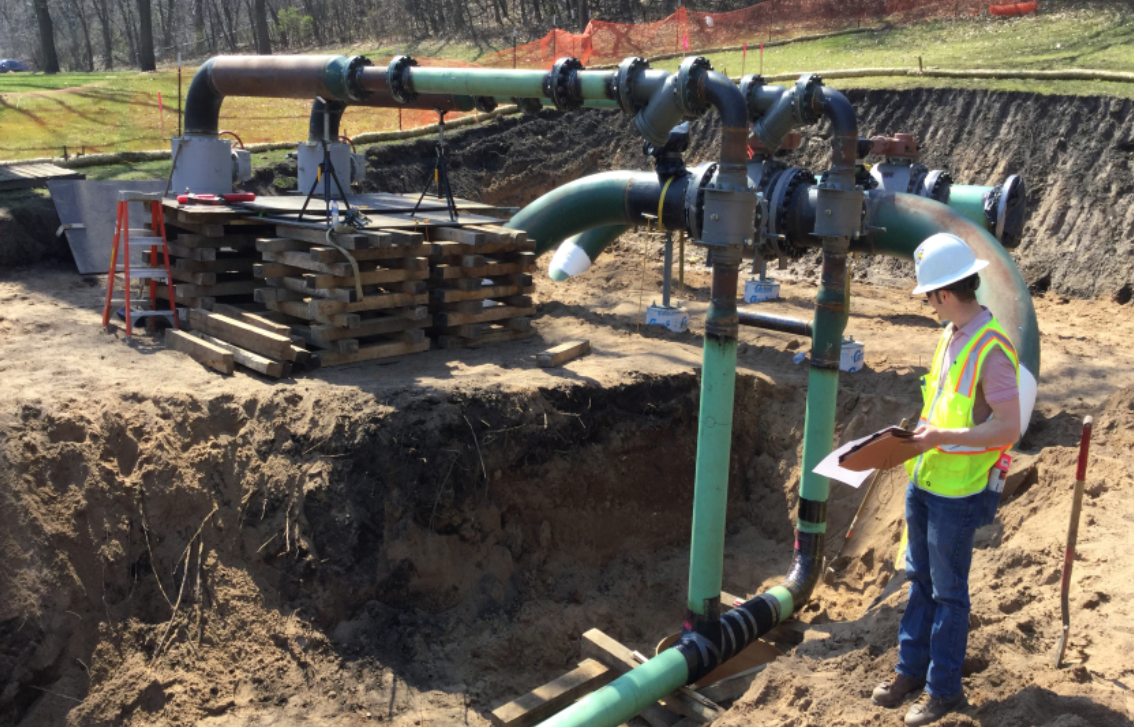
Photo: http://www.windomdam.com/CSS/2008-11-18%20Letter%20to%20City%20Responding%20to%20the%20SEH%20Feasibility%20Report.htm

By Tony Havranek, Sr. Ecologist, WSB

Boating, fishing, swimming, and enjoying a day near a lake, river, or stream is part of Minnesota’s culture. Unfortunately, nearly 40 percent of Minnesota’s lakes and streams are included on the Minnesota Pollution Control Agency’s (MPCA) Impaired Waters List. (See the list at https://bit.ly/2BwTk3r.)

Meeting surface water quality standards requires monitoring pollutants that can affect the physical, chemical, or biological makeup of surface water. Phosphorus is one of the main pollutants in the state’s bodies of water. Phosphorus is a pollutant that comes from both external and internal loading sources. Today, Minnesota law limits the use of fertilizers containing phosphorus, but prior to these limits, phosphorus was widely used in several commonly used chemicals settling in our lakes, rivers and streams. Meeting water quality standards requires a reduction of phosphorus in the water column. A water column is the vertical section of water from the surface to the bottom of a body of water.

External sources include stormwater runoff, atmospheric deposition, and directed pipe runoff. Internal sources include sediment suspension, aquatic vegetation, and an overabundance of rough fish. Both internal and external loading sources contribute to surface water quality degradation.

Managing water quality is not only important to the community and the people who live and work there, but it also drives ecological integrity. Because of this, water quality is regulated by federal, state, and local governments.

Where to start
With the appropriate funding and expertise, it is possible to solve water quality challenges and get bodies of water removed from the MPCA Impaired Waters List. Fortunately, numerous funding resources are available through grants, partnerships, and coalitions.

Since water is continuous across landscapes, developing partnerships is often the most cost-effective way to approach managing water quality. It lessens financial burdens and helps many communities achieve long-term success. It also creates opportunities for communities to create long-term plans to improve and protect water quality.

To begin to make improvements, it’s important to understand a community’s water quality issues. Start putting the pieces of the puzzle together by quantifying the scale and source of the pollutant before selecting an approach. The MPCA’s website offers information on a body of water’s total maximum daily load (TMDL) at https://bit.ly/2BbsrVH.

The TMDL is the maximum amount of pollutant a body of water can receive without exceeding water quality standards, and allocates pollutant loads from internal and external sources. In other words, the TMDL identifies all sources of a pollutant and determines how much each source must reduce its contribution.

TMDL implementation actions
Once the TMDL is identified for each body of water, a plan of action can begin to be shaped. Several methods can be implemented to begin to improve water quality.

Public education and outreach. Fertilizers have a major impact on water quality and ecosystems, creating a chain reaction. Excess phosphorus found in fertilizers creates algae blooms. As algae decomposes, oxygen is removed from the water. A lack of oxygen in an aquatic ecosystem effects the native species in a body of water. Educating the public of the harmful effects caused by fertilizer runoff can help limit the amount of phosphorus or other nutrients that flow into bodies of water.

Structural best management practices (BMPs). The MPCA defines a BMP as a stationary and permanent structure that is designed, constructed, and operated to prevent or reduce the discharge of pollutants in stormwater. BMPs can be used for on-site or regional treatment and help a community take a more strategic approach to managing its water quality.

Carp management. Internal loading of phosphorus can be caused by an overabundance of the invasive common carp. High levels of phosphorus cause algae blooms, reduced clarity, loss of aquatic plant and fish habitats, and a threat to human health. Managing and mitigating carp populations improves long-term overall water quality and ecological integrity.

Vegetation management. Invasive aquatic vegetation displaces native vegetation and can release phosphorus into the water column. Vegetation management can help solve this problem. Strategically placed native vegetation can help protect soil from erosion and reduce surface water runoff. Stormwater is then held in place and slowly released, rather than flowing directly into the body of water. Native aquatic vegetation can also help reduce phosphorus-laden sediments through wind and wave action.

There isn’t a silver bullet that can solve a community’s water quality challenges at once, but these are several proven options that can lead to improved water quality and ecological integrity.

This article was originally published in the January/February 2019 issue of League of Minnesota Cities magazine.

Pavement mixes used to build streets, highways and parking lots are not the same. There are several different mix requirements that are applied to each based on the use of the surface.  Parking lots carry a low amount of daily traffic, but experience wear and tear due to static loading or from serving as a rest area.  Rest areas and truck stops have a high number of creep speed Equivalent Single Axle Loads (ESALs). ESAL is a concept developed from data collected at the American Association of State Highway Officials.  It is a road test that measures the damage relationship and the effects of axles carrying different loads.

When determining pavement mix, a parking lot’s classification must be established. Parking lots are divided into two classifications: passenger vehicle parking and commercial vehicle parking.  In some cases, parking lots serve as both passenger vehicle parking and commercial vehicle parking. These parking lots require special considerations.

The Minnesota Department of Transportation (MnDOT) has developed mix designations that are included in their Standard Specifications for Construction Book. All project documents submitted must be in accordance with the book. Mixture designations are coded and outlined for their specifications using SPWEA430C.

SP  | Design Type

Superpave, which is a gyratory compactor design used for all asphalt mixtures. This is the latest design used to replace the Marshall mix design method.

WE  | Lift course

  • WE indicates wear and shoulder wear, which is the top 4 inches of asphalt on MnDOT projects, or top 3 inches on local projects.
  • NW indicates non-wear course, which lies below the top 4 inches of asphalt on MnDOT projects or top 3 inches on local projects.

A  | Maximum Aggregate Size

2360 GyratoryMaximum Aggregate Size
A-1/2”
B-3/4”
C-1”
D-3/8”

 | Traffic Level

The traffic level is based on the ESAL or the annual average daily traffic (AADT).  Higher traffic levels require a higher-level percent of crushed aggregates.  This will reduce the effects of rutting on pavement caused by traffic loading when soft mixes are used.

Traffic LevelMillion ESALAADT
2< 1< 2,300
3< 3< 6,000
4< 10 
5> 10 

30 Air Void Requirement

  • 40 for 4.0 percent air void. This is usually used on a surface with high traffic levels. The traffic helps compact the asphalt mixture.
  • 30 for 3.0 percent air void. This is usually used on surfaces or roadways with low traffic level.

C  | Performance Grade (PG) Binder Type

               2360 DesignationBinder Grade
APG 52S-34
BPG 58S-28
CPG 58H-34
EPG 58H-28
FPG 58V-34
HPG 58V-28
IPG 58E-34
LPG 64S-22
MPG 49S-34

The first numbers of the binder type are the average seven-day maximum pavement temperature (oC) and the second number is the expected minimum pavement temperature (oC). The letters dictate the traffic level. “S” grade is for standard traffic, “H” grade is for heavy traffic, “V” grade is for very heavy traffic, and “E” grade is for extremely heavy traffic.

Example – Binder Type A:

A PG 52S-34 is intended for use where the average seven-day maximum pavement temperature is 52 degrees Celsius and the expected minimum temperature is -34 degrees Celsius, under standard traffic conditions.

Parking lot mix types:

Below are some recommendations on mix types that will help enhance the overall performance of the parking lots.

ClassificationNew Construction or ReconstructionMill and Overlay
Passenger Vehicle Parking OnlySPWEA430CSPWEA430B
Commercial Vehicle ParkingSPWEA530F / SPWEA530ISPWEA530H

Aggregate Size

  • Aggregate size A is recommended due to the smaller size aggregate yielding a smooth finishing surface.

Traffic Level

  • Traffic level 4 will help limit the depression in the parking stalls for passenger vehicle parking only.
  • Traffic level 5 includes an increased percentage of crushed aggregate that helps mitigate creep speed ESAL from trucks.

Air Void Requirement

  • A 3.0 percent air void will provide a tight finishing surface and an aesthetically pleasing look.

PG Binder Type

  • The binder type used in a mill and overlay is generally lower than what is used in new construction or reconstruction. Cracks on existing underlying pavement reflect through the new overlay over time. This method is not as cost-effective as a higher binder grade. This does not mean that a higher binder grade in any mill and overlay project should not be used.  A high binder grading helps slow down thermal cracking.  It is at the discretion of the designer to decide if it is cost-effective to delay the reflective cracking.
  • On commercial vehicle parking surfaces, asphalt binder grade F is a sufficient option, but in extreme conditions a higher binder grade I (PG 58E-34) should be used to reduce rutting and shoving.
  • Surface areas where trailer landing gears are down should be designed with concrete pavement to support concentrated loads.

The recommendations above are guidelines. Additional investigation is necessary and should include coring or boring to further evaluate the subsurface conditions prior to a design work.

WSB

The materials that are used to build roads and buildings are a vital part of every project. You can’t build a car without all the right parts or make a cake without all the specified ingredients. The final product of a project, whether it be a highway, bridge, or apartment building, is only as good as the quality of materials incorporated. Construction materials specifications become incredibly important when design plans are being developed. When a developer, city, county or the department of transportation sets their project specifications, they do so with longevity and the project’s life expectancy in mind.

Why do we test?

We begin testing at the beginning of a project, and in some cases before, to establish a foundation for success. Both vertical and horizontal construction require material testing and inspections. In both types of development, confirming materials are aligned with the original design helps prevent potential legal claims, safety issues and catastrophic events. It’s why we test materials both in the field and in a lab. Our  lab allows us to test construction materials and assure that the materials have been processed, tested, and reported following applicable standards and specifications. Both field and laboratory testing are critical to ensuring the safety and viability of the materials.

What does the future of materials testing look like?

Like many other areas of construction, technology is changing the construction materials industry and they’re not as far off as some may think. A recent blog discusses new materials on the horizon that could revolutionize the industry. Sustainable material substitutes are being introduced like recycled and pollution-absorbing bricks, translucent wood, and light generating cement. These new materials are results of aggressive and intense research and development. Although not widely used today, these changes will make material testing even more important as we begin to see the next evolution of building materials used in our everyday infrastructure.

Learn more about our construction and material testing services.

By Robert Slipka
Feb. 6, 2015

Integrated design brings together a diverse team of design professionals on one project. Projects benefit from this approach because a wider range of experts is contributing throughout the project as a team, rather than acting independently.

Early integration is crucial to reduce the potential for expensive conflicts as design progresses or implementation begins. The integrated design approach involves all parties, including design professionals, clients/owners, permitting agencies, and others. Involvement may also include cost analysis specialists, construction managers, and contractors.

No matter what that project type, an integrated approach helps ensure a holistic outcome rather than a culmination of interdependent elements. Below are two examples of what teams could look like.

Example 1

A site development project is led by a landscape architect or civil engineer with direct integration of specialists such as environmental scientists, ecological specialists, engineers, building architects, electrical engineers, irrigation designers, and the client (including their operations and maintenance staff).

Example 2

A roadway corridor project is led by a transportation engineer and/or a planner. The team for this type of project may integrate urban designers/landscape architects, engineers, environmental scientists, right-of-way specialists, and representatives from numerous government agencies.

Design charrettes and brainstorming sessions are often utilized heavily in the beginning phases of project planning and design. This helps the team identify key goals, strategies, and desired outcomes of the project while also establishing areas of conflict or design implications. Including a diverse range of professionals means a better likelihood of achieving creative solutions that might not be explored in a conventional, non-integrated approach. As the project develops into the construction documents phase, continued collaboration is required to ensure compatibility of spatial character, uses, spaces, materials, and other factors. This approach can also identify conflicts that might not otherwise be identified until late in design or into construction, avoiding unanticipated costs or redesign.

Although an integrated approach provides better results, it is important for consultants and clients to judge how extensively integration needs to occur based on costs and benefits. Some projects are smaller in scale or fee, which can make an elaborate integrated approach difficult to justify. Clients should also be aware that the term “one-stop shop,” often utilized to describe multi-disciplinary firms, does not necessarily mean that an integrated design approach is used for projects. If it is unclear or unproven, clients should ask the consultant to describe how the various team members will be integrated throughout the design process. The ultimate goal is to achieve higher quality projects with increased cost effectiveness to clients.

by WSB Municipal Engineering
Dec. 22, 2016

What legal responsibilities do bridge owners have?

Any municipality that owns a bridge in Minnesota must appoint a bridge program administrator. This administrator needs to be a professional engineer with a bridge background, as they are responsible for ensuring their bridges are inspected, load rated, and load posted (if required) according to state and federal law.

What does a bridge safety inspection involve?

A bridge safety inspection is an evaluation of the physical condition of a bridge. The inspection involves a visual and hands-on evaluation of all bridge components. The inspector looks for issues such as corrosion, deterioration, settlement, damage, or scour, and the results are detailed in a report based on each component. Following a bridge safety inspection, the overall condition of the bridge is compiled in an online database. Bridges are required by law to be inspected either annually or biannually, depending on the bridge type and condition. Special inspections such as an underwater inspection may also be necessary for bridges with components that are not visible during low water conditions.

How does a bridge owner know when it is time to replace a bridge?

The answer to this question varies based on the volume and type of traffic over the bridge. Bridges should always be replaced before the safety of the traveling public is at risk. Every bridge is assigned a sufficiency rating score, which varies from 0-100 and factors in the condition of the bridge, traffic volume importance of the route, and load carrying capacity. A bridge’s sufficiency rating is used to determine when it should be replaced and when it qualifies for funding. Bridges are also replaced when they are no longer able to meet traffic needs. Bridge owners can significantly extend the life of bridges by performing routine maintenance such as painting, cleaning, and crack sealing.

What is a bridge load rating?

A bridge load rating is a calculation that determines the safe load carrying capacity of a bridge. Bridge load ratings are based on the original capacity of the bridge while factoring in any deterioration or changes to the bridge’s condition that have occurred over time. A bridge load rating calculation is required when the bridge is first constructed and whenever the condition or configuration of the bridge has changed. The results determine if a bridge should be load posted and if it is safe for special permit vehicles to cross the bridge.

Glossary

  • Load Rating: A calculation to determine the safe load carrying capacity of a bridge.
  • Load Posting: Restricting the weight of vehicles that cross a bridge in order to prevent overloading.
  • Sufficiency Rating Score: A numerical value on a scale of 0-100 that considers a bridge condition, traffic volume importance, and load carrying capacity.

Co-authored by Jay Kennedy and Diane Hankee.

The text of this article contains general information and is not intended as a substitute for specific recommendations. Your professional staff is more familiar with your community and can provide specific recommendations. Guidelines and regulations change and may be different from when this article was published. 

By Brandon Movall
Aug 1, 2016

With the state of America’s infrastructure declining due to climate change and limited funding, today’s engineers and scientists must adopt creative and sustainable solutions. In 2011, the American Society of Civil Engineers (ASCE), the American Council of Engineering Companies (ACEC), and the American Public Works Association (APWA) came together to revolutionize the way engineers plan, design and build. The result was Envision, a holistic rating system for sustainable infrastructure.

Envision is a rating system to help project teams incorporate higher levels of sustainability at each step of a project, from assessing costs and benefits over the project lifecycle to evaluating environmental benefits and using outcome-based objectives. Envision considers social, environmental, and economic factors of projects (a process called the Triple Bottom Line), rather than only focusing on economic factors. Envision uses a scorecard of 60 credits divided into five categories that reflect all aspects of the Triple Bottom Line:

  • Quality of Life
  • Leadership
  • Resource Allocation
  • Natural World
  • Climate and Risk

By tallying the credits achieved throughout the project lifecycle, Envision is able to effectively rate proposed infrastructure options in a way that is easy to communicate to clients, consultants and owners.

While there are many sustainability rating systems out there, there are a few things that make Envision the best option:

  1. Envision rates all types of civil infrastructure, such as transportation, water, energy, information, and landscape infrastructure.
  2. Envision covers the entire life cycle of a project, from the first meeting of the project team to post-construction maintenance.
  3. Envision is free to use. Anyone can sign up for an Envision account and have access to the guidance manual and scorecard. The only costs involved are if a project is registering for awards through Envision, or if you want to get special training and become an Envision Sustainability Professional (ENV SP). These are optional and are not necessary to use the Envision system on a project.

In addition to individual users, many companies and public agencies across the United States have implemented Envision into their planning, design and construction processes. Benefits to a company or agency include discounted ENV SP certification rates, discounted project award registration rates, exclusive content from the founding organizations, and more. As part of our commitment to bettering ourselves, our clients, and our world, WSB is proud to be recently certified as an Envision qualified company.

To change the world, we must change our practices. Envision is one large step toward planning, designing and building a sustainable future. For more information about Envision in general, visit www.sustainableinfrastructure.org. For more information about Envision at WSB, please contact Katy Thompson, Brandon Movall, Stephanie Hatten, or Ann Wallenmeyer.

References:

“2013 Report Card for America’s Infrastructure.” 2013 Report Card for Americas Infrastructure. ASCE, n.d. Web. 28 July 2016.

“Envision.” Institute For Sustainable Infrastructure. N.p., n.d. Web. 28 July 2016.

By Joe Handtmann
June 10, 2015

A wetland is a flooded area of land with a distinct ecosystem based on hydrology, hydric soils, and vegetation adapted for life in water-saturated soils. Wetlands are heavily protected by federal, state, and local policies due to their environmental benefits and the historical filling and dredging that removed more than 50 percent of them across the country. Wetland types vary based on their location. Mangroves are found along the shores of salty waterbodies while peat bogs are found in cool climates, where slow decomposition facilitates the accumulation of peat over long periods of time. Common wetlands in Minnesota include wet meadows, shallow and deep marshes, scrub-shrub wetlands, and bogs.

Requirements and delineation
To be considered a wetland, the site must have the presence of water, soils indicative of frequent and prolonged flooding, and vegetation suited to handle flooding or saturated soils. Determination of wetland boundaries must be done by a certified wetland delineator based on the Army Corps of Engineers Wetland Delineation Manual and appropriate regional supplements. Delineations are subdivided into levels. Level one means onsite inspection is unnecessary; level two means onsite inspection is necessary; and level three, which is a combination of levels one and two.

Hydrology
Identifying hydrology, or presence of water, can be as simple as noticing the sustained presence of water in boreholes or manually measuring surface water, or as difficult as requiring the use of continued monitoring wells and piezometers. Areas with a surface water depth of more than 6.6 feet are considered deepwater aquatic habitats and not wetlands.

Hydric soils
Soils that are saturated for a long period of time display common visual patterns identifiable in a soil profile. Soils developed in anaerobic conditions show unique colors and physical characteristics that are indicative of hydric soils. When water continuously saturates the ground, organic soils are likely to occur. Organic soils are referred to as peats or mucks and require more than 50 percent of the upper 32 inches of soil to be composed of organic material. Hydric mineral soils form under a range of saturated conditions, from permanently saturated to seasonally saturated. Indicators for hydric soils can be found in the Field Indicators of Hydric Soils in the United States guide, published by the USDA.

Hydrophytic vegetation
Wetland vegetation is classified by its ability to survive in saturated soil conditions. These classifications range from OBL (obligate wetland plants that usually occur in wetlands), to FAC (facultative plants that occur in wetlands and non-wetlands equally), to UPL (obligate upland plants that are rarely found in wetlands). When OBL, FACW, and FAC species make up the vegetative species at a site, then the site is considered to have hydrophytic vegetation.

Classification
Two main systems are used to classify wetlands in Minnesota – the Circular 39 and the Cowardin systems. Both systems are commonly used when writing permit applications or describing or writing about wetlands. A noteworthy exception is the case of the National Wetlands Inventory, for which the U.S. Fish and Wildlife Service exclusively used the Cowardin system.

Circular 39
The Circular 39 system was developed by the U.S. Fish and Wildlife Service in 1956, and divides wetlands into eight different types based on water depth and variety of vegetation.

  • Type 1: Seasonally Flooded Basin/Floodplain Forest: Soils are flooded during variable seasonal periods. Often found in upland depressions, these wetlands are well-drained during the rest of the year. Vegetation can be quite variable.
  • Type 2: Wet Meadow, Fresh Wet Meadow, Wet to Wet-Mesic Prairie, Sedge Meadow, and Calcareous Fen: Soils in these wetlands are usually without standing water, but saturated close to the surface. Vegetation includes sedges, grasses, rushes, and broad-leaved plants. These wetlands are notes for their wildlife habitat capabilities.
  • Type 3: Shallow Marsh: Shallow marshes are covered with more than six inches of water throughout the year. Typical vegetation includes grasses, cattails and bulrushes.
  • Type 4 – Deep Marsh: Similar to shallow marshes, deep marshes are covered in water from six inches to three feet deep. Cattails, reeds and lilypads are common.
  • Type 5: Shallow Open Water: Water is present, but less than six feet deep and fringed with emergent vegetation. This type of wetland is often used for fishing, canoeing and hunting.
  • Type 6: Shrub Swamp; Shrub Carr, Alder Thicket: Soils are heavily saturated and may be covered in up to six inches of water. Dogwoods, willows and alders are all common species.
  • Type 7: Wooded Swamps; Hardwood Swamp, Coniferous Swamp: Typical trees in wooded swamps include tamaracks, white cedar, arborvitae, black spruce, balsam, red maple, and black ash. The prevalence of trees helps control water flow during flood events. Soils are saturated up to a few inches of the surface and may be covered by up to a foot of water.
  • Type 8: Bogs; Coniferous Bogs, Open Bogs: Organic soils are prevalent in bogs, with continually waterlogged soils and a spongy covering of mosses. Shrubs, tamaracks, mosses, and black spruce are all common species.

Cowardin
The Cowardin system was developed in 1979 for the U.S. Fish and Wildlife Service to classify wetlands and deepwater habitats. This system was used in the National Wetlands Inventory to identify wetlands. Two major wetland types, coastal and inland, are identified. All Minnesota wetlands are defined as inland (palustrine), which is then subdivided based on vegetation classes and bed material.


By Addison Lewis
October 21, 2016

What is a Planning Unit Development (PUD)?

A Planned Unit Development (PUD) is a zoning designation used to ease the strict application of a zoning ordinance in exchange for creativity in development. A PUD is often used to provide deviations from standards such as setbacks, height, density, uses, and other regulations. A PUD is used when planning for larger areas (one acre or more), planning for multiple contiguous sites, or accommodating multiple buildings on one site. The area should be under unified ownership at the time of a land use application for a PUD. In exchange for deviations from the zoning requirements, benefits such as additional greenspace, pedestrian or transit amenities, enhanced energy efficiency or stormwater management, affordable housing, mixed use, or enhanced architectural features are usually provided by the developer to achieve a higher quality development that might not otherwise occur.

When to use a PUD 

A PUD is used to implement development goals identified in a community’s comprehensive plan. PUD process is not just an alternative to variances – it should be considered for unique development projects where the public benefit or development goal is clearly understood, and when the project would not otherwise be permitted through strict application of the zoning ordinance.

What to consider when developing a PUD

When developing a PUD ordinance, be sure to identify amenities or conditions that will help achieve the goals and objectives of the community’s comprehensive plan. A PUD ordinance should only be used if these amenities or conditions are offered by the developer. You may want to specifically list in the ordinance which specific zoning standards were deviated from.

A PUD designation is a similar process to rezoning. Think of each PUD as a customized zoning district that specifically identifies the location of buildings, uses, architectural design, etc. A PUD is a great tool for encouraging creativity and providing flexibility from the zoning ordinance, but once it is adopted any future change could require an amendment, depending on whether it is a major or minor change. A minor change can be approved administratively, while a major change would need to follow the same process as a rezoning. The community’s ordinance should identify which changes are considered minor or major.

By John Mackiewicz
February 6, 2015

ArcGIS Online connects maps, apps, data and people so you can make smarter, faster decisions. It gives everyone – both inside and outside organizations – the ability to discover, use, make and share maps from any device at any time. At its core, ArcGIS Online is a hosted cloud software as a service (SaaS) platform. Everything you need to create your own web maps and apps is available on ArcGIS Online. You can create maps from Microsoft Excel or upload your data from ArcMap to share your map and collect data in the field on your tablet or phone.

ArcGIS Online supports many users collecting data in the field at one time. This presents a problem for large workforces, as you may need to track where your collectors go when working in the field. Using Esri’s Collector for ArcGIS app, you can have it periodically report the location of data collectors back to a tracking layer on ArcGIS Online by publishing a tracking layer on ArcGIS Online and adding it to an Web Map with tracking enabled. When this Web Map is accessed within the collector app, the collector app sends its GPS location back to the tracking layer hosted on ArcGIS Online at a predefined interval.

At WSB, we view ArcGIS Online as a technology that:

  • Can quickly be deployed for multiple uses
  • Is flexible enough to handle diverse workflows without requiring any programming
  • Has untapped potential for public outreach

Below is one of our favorite examples of how we used ArcGIS Online to help a client deliver immediate value to both the organization and the public.

Tracking Santa

For more than 25 years, firefighters in the City of St. Anthony, Minnesota, have helped Santa by collecting gifts for those in need. Santa rides in fire trucks throughout the city collecting gift donations from residents. In 2014, the city wanted to allow residents to track Santa’s location along his route.

The City of St. Anthony decided to utilize ArcGIS Online to track Santa, thanks to all the app’s capabilities.

Here’s how we did it:

  1. A tracking layer was published on ArcGIS Online.
  2. The tracking layer was added to a Web Map configured with the city’s custom Esri base maps with tracking enabled.
  3. The city deployed an iPad with the Esri Collector for ArcGIS app to ride along with Santa with the Web Map open on the fire truck.
  4. A custom web app was built using our DataLink platform to show Santa’s most recent location.

As the fire truck drove along its route, the collector app was configured to report the truck’s location every 30 seconds back to ArcGIS Online. Residents used DataLink to view Santa’s current location in relation to their house so they knew when Santa was arriving.

Tracking Santa’s location is certainly a unique use of ArcGIS Online, but it shows how extensible the ArcGIS Online platform is. With just a few clicks, you can begin to track real-time locations of users who are using the collector app.

WSB Staff working in the lobby of the WSB headquarters.

Discover Our Difference

We partner with our clients and communities to build what’s next in infrastructure – the places, spaces, and systems that support our lives.