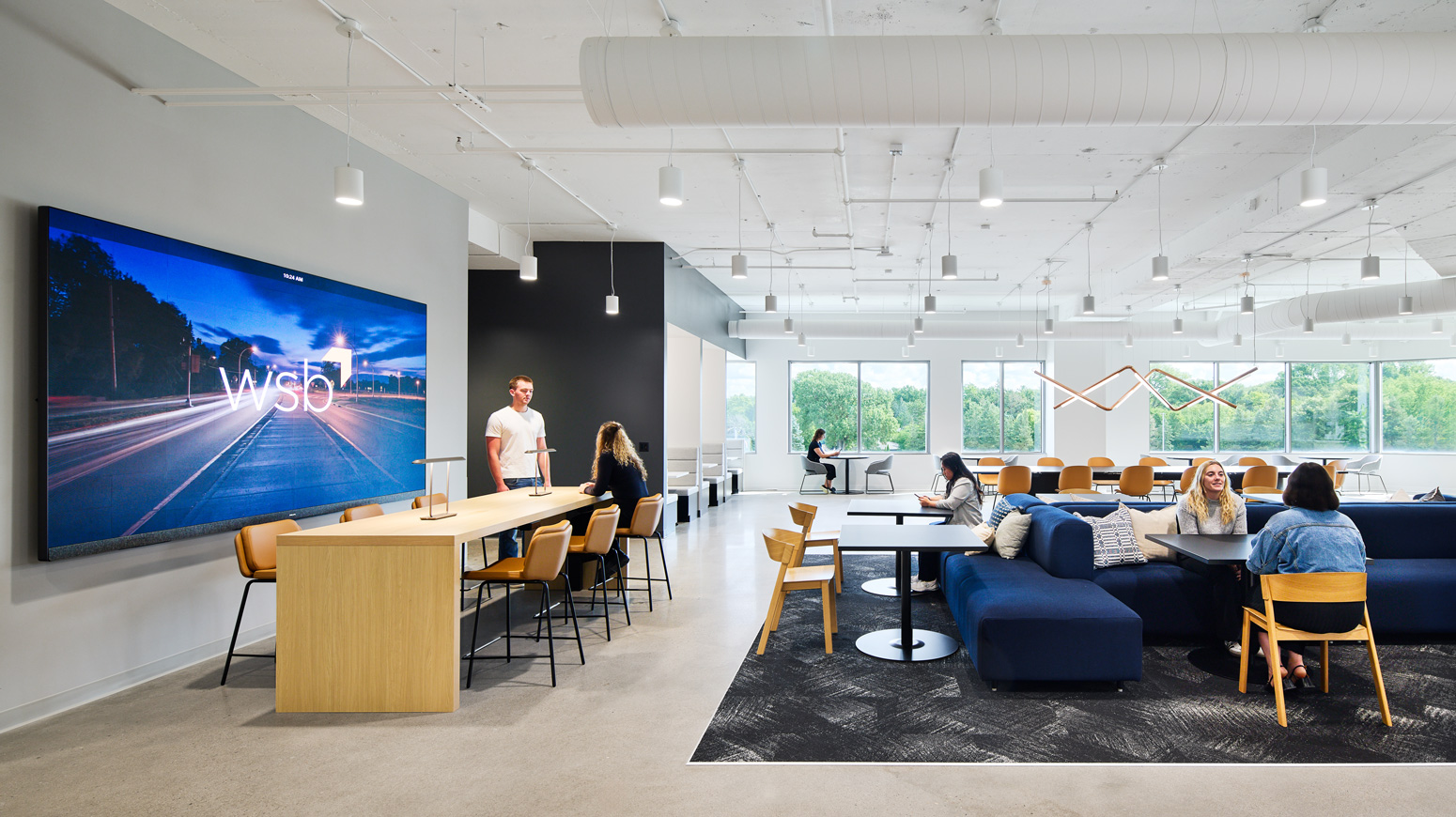
Local engineering firm WSB today announced the promotions of Monica Heil and Morgan Dawley to leadership positions in the firm’s municipal services division. In their new roles, Heil and Dawley will oversee the growth and management of WSB’s municipal market, including municipal engineering, community planning, economic development and water-wastewater services.
Heil, formerly the senior director of municipal services, is now the vice president of municipal services. Heil is a civil engineer who has served many communities in Minnesota for over 15 years. She replaces vice president Lee Gustafson. Gustafson, the former longtime engineering director for the city of Minnetonka, assumed the role in 2018 and worked alongside Heil to restructure the fast-growing team to better serve the firm’s clients. Gustafson will remain on the firm’s leadership team in a reduced role.
“Monica has a deep
understanding of long-term operations and maintenance needs associated with
municipal engineering,” said Gustafson. “She believes in developing solutions
that have a profound effect on the communities she serves. There is no one
better to lead WSB’s municipal services than Monica and I am confident in her
ability to deliver on our client’s infrastructure needs.”
Filling Heil’s previous role
as senior director of municipal services is Dawley. Dawley is the former director of municipal client
services. He has overseen municipal, transportation and civil engineering
projects in several Twin Cities communities offering consultant services that
include strategic planning, preliminary design, project development and public
engagement.
“Morgan has shown tremendous
commitment and leadership to WSB’s municipal team,” said Jon Chiglo, WSB’s
chief operating officer. “Throughout his tenure he’s made a strong impact on
our clients and staff. He has asserted himself
as a leader and I am thrilled for Morgan to take a more active leadership role
within the company.”
In the last two years, WSB has expanded the executive team, built a larger C-suite and acquired two companies. As the third-largest engineering firm in the Twin Cities, WSB has 14 offices in four states.
To view the resumes and
headshots of Heil and Dawley, click on the links below:
All of us have been affected in unprecedented and profound ways by the COVID-19 virus. Some mornings it seems as though just making it through to the end of the day is the goal. As I began putting together my thoughts around what city/county managers & administrators should be thinking about during the 2nd quarter of a “normal” year, it struck me that there aren’t “normal” years. Each one is unique with its own challenges and opportunities. Yes, the COVID-19 virus is a big, unprecedented challenge. However, it’s one that public administrators can navigate because that is what we do. We lead our organizations through good times and bad, all while inter-weaving what is “normal” with the constant changes. My goal here is the same, weave together “normal” 2nd quarter considerations for city/county managers & administrators with the current challenges and changes of COVID-19.
Labor Contracts
Most public sector organizations have labor agreements with at least one, if not multiple, labor unions or bargaining units. The budgeting process is a year-round affair that likely started in quarter one, and because of this, it is important to start planning and strategizing as early as possible for labor negotiations.
With the
onset of the COVID-19 virus and the challenges it presents, it is even more
important to plan where to begin. We are likely facing health insurance
increases, a struggling economy, and political pressure to keep taxes low. How
do public officials tell essential service employees like police officers, fire
fighters and public works employees, who are put their lives on the line daily,
that there could be a freeze in pay and benefit adjustments?
This is the time to come together. Seek out connections and relationships with other public sector administrators and organizations to collectively find creative ways to solve these challenging financial and contractual issues. Start talking with bargaining units now to build trust and communicate expectations.
If you have
labor contracts that expire at the end of this year, start connecting and
communicating with colleagues and peers. Work together to find creative
solutions to challenging contract discussions. Begin conversations and communicate
expectations with your labor groups.
Public Works
Spring is time to start thinking about seasonal transitions in public works. There is the transition of equipment and work plans from winter activities to warm weather duties. Equipment and work plans that are set up for plowing, snow removal, ice rink flooding and inside related work, must now be transitioned to summer activities such as street sweeping, street patching, water line flushing along with lawn, park and public property maintenance. Additionally, second quarter brings the start of street reconstruction and other infrastructure projects.
It is important for administrators & managers to work with their public works directors, city engineers and staff to plan for inevitable challenges. Those may include a diminished workforce due to COVID-19; ensuring the safety of city, consultant and contractor staff; barriers to public engagement and communications regarding projects, work plans and safely interacting with the public.
The
transition from winter to summer activities can be difficult for public
organizations, especially during this time. However, it is also an opportunity
to find and evaluate new and more efficient processes for making these
transitions happen.
Parks
Like public works, parks become an important priority for public entities and residents when spring arrives. Without a doubt, our current situation of closing playgrounds and other high contact amenities is difficult. However, it can provide opportunities for park improvement. With park amenities closed, there is an opportunity for performing any delayed maintenance, replacement or cleaning.
This is the time of the year to be communicating with local athletic associations regarding needs and desires for their upcoming seasons. In the “new normal”, communication regarding plans and expectations becomes even more imperative. Are associations still planning for their seasons and tournaments? If so, will the city/county have the staff to maintain and prep the fields as needed? Are they postponing tournaments, or making them smaller, and at fewer locations to allow for social distancing and better maintenance?
It is essential to start considering and planning for a summer with closed parks and amenities. Take the opportunity to make and implement needed improvements and maintenance during the closure and communicate with the local athletic associations about expectations for the upcoming summer season.
Community Connections
During these interesting times, it is important that cities and counties stay connected to their residents and community. This will look different in today’s social distancing climate, but community connections remain a vital part of a public organization’s success. Public entities must find ways to connect to their constituents, especially those with little or no technology. My colleague Dan Pfeiffer, Director of Public Engagement at WSB, recently provided insight on this topic with his piece, “Staying Connected When Public Meetings Aren’t Possible”.
This is also the time of year when cities start to plan in earnest for summer events and celebrations with parades, carnivals and fireworks. The current state of social distancing and limits on congregating in large groups, make it important to start the conversation now about canceling or modifying these events to accommodate new recommendations.
Finding ways
to successfully maintain community connections will not be easy. Organizations
will be successful in their recovery efforts if they find ways to keep the
members of their community connected during this crisis.
Team Members/Employees
How well an organization communicates with, engages, and treats its team members and staff during the COVID-19 crisis is a barometer for future success. Managing the impacts of COVID-19 virus on employees should include addressing stress, burnout, mental health, flexible work schedules and working from home in order to maintain the health of the individual and the organization.
Connecting with employees during an outbreak and social distancing may look different, but it is still possible. Continue to celebrate milestones such as birthdays and work anniversaries with online meetings, calls and lunch delivered to the employee’s home. Use video calling to reach out, check in and touch base as it is more personal than a text or email. Help model work/life balance. Even though work and home are now one and the same, you do not need to be, and should not expect others to be, available 24/7. Continue to build in and set aside time for both work and personal time.
The
possibility of a diminished workforce remains likely as summer camps and events
are cancelled, budgets tighten, and cities/counties do not hire seasonal
workers. They may also have to find creative ways to use less busy staff to
provide essential services. For example, full time recreation staff that may
not be as busy this summer can assist with parks maintenance or general
administrative work. Find creative ways to keep team members employed and
engaged.
Communicating
and engaging with your team members, even in small ways, is vitally important
and goes a long way toward keeping them focused and productive during these
trying times.
Conclusion
Though the COVID-19 pandemic has created unprecedented challenges for us all, I am confident in the work of public administrators and managers to integrate change. During this time, do not overlook the importance of focusing, planning, discussing and communicating about priorities such as labor contracts, public works and parks transitions, community connections and the safety and engagement of team members and employees. The success of our cities, counties and communities depends on it.
Bart has been a City Administrator/Manager in the public sector for over 16 years. He is a strategic leader known for relationship development and connecting people around common themes and goals. Bart’s experience lies in leading and creating an organizational culture of collaboration where the whole becomes greater than the sum of its parts.
As New
Year’s Day begins to fade and we launch full steam into 2020, I take the
opportunity to reflect on my time as a City Administrator in cities both large
and small as well as discuss with colleagues those things administrators & managers
should be mindful of at the start of each year.
The following are five areas of importance that municipal executives
should consider.
Strategic & Comprehensive Plan
Most
organizations have a strategic or comprehensive plan. These can be extensive and far reaching with
a mission, values, goals, and implementation strategies set by the council, board,
staff, and strategic stakeholders, or they can simply be a short list of
priorities the council has established.
If a community or organization does not have clear direction, the city
administrator should first consider finding the best way to accomplish setting
a clear direction. This is something
that the Mayor of Oakdale and I made a priority, especially when new
councilmembers and staff were introduced into the organization.
Once in
place, it is the role of the administrator and manager to implement the
plan. At the beginning of each year, one
should consider how the plan for the previous year has gone, how and what the
organization will need to implement the current year’s plan and start looking
toward the creation and implementation of next year’s plan.
The
beginning of each new year is an opportunity to reflect upon the past, evaluate
the present, and prepare for the future.
New Councilmembers
The
beginning of a new year often brings changes to the council and board. New members can feel excitement for their new
role as well an overwhelming feeling of uncertainty. It is imperative that administrators and managers
help guide and assist newly elected officials toward success in their new role. Remembering that this could mean different
things to each person and building a relationship with individuals is the key
to deciphering how best to connect and communicate with them.
Provide the
opportunity for success by connecting with each individual and guiding them toward
team, organizational, and personal achievement.
Budget Process
As with
strategic planning, the beginning of the year is the time to start laying the
groundwork for the next budget.
Budgeting is truly a year-round process.
Once the annual budget is adopted in December, there is a short break
and the process begins again early in the year.
Utilizing the strategic and comprehensive plans in planning and crafting
the budget process for the year is imperative.
These documents provide the priorities of the council and board, and identify
investments being considered. During my
time in Oakdale, the finance director and I would meet with each department
head to strategize how best to incorporate the short-term needs of each
department with the long-term goals of the council.
Ensure
successful budget preparation by planning and crafting a framework for the process
and incorporating strategic & comprehensive plans and goals.
Legislative Session & Priorities
With each
new year comes a new Legislative Session and the opportunity for municipalities
to advocate on behalf of priorities and projects of importance. Having a relationship and building a
connection with the Senators and House Members that represent your area is
vital. Being able to work with them
toward the passage of those priorities and projects is essential. They want to work on behalf of their
constituents, so help them by having a list of priorities ready that they will
advocate for. Another valuable resource
in this area is the League of Minnesota Cities (LMC). Work with the LMC on your list and how to
advocate with your Legislators.
Throughout my career, I have been part of the LMC’s policy committee
process. Consider taking advantage of this
opportunity to have a voice in the legislative process for city issues.
Having a
relationship and connection with your state elected officials, the LMC, and a
list of priorities ready for them to advocate on your behalf is an important
piece of the annual thought process for an administrator and manager.
Relationships & Connections
At the
beginning of each year, take stock of and lean into those connections and
relationships that will be vital to the success of the organization and you as
a professional. These might include
connecting with county or surrounding municipal partners, key business or
non-profit community contacts, state or federal elected officials, professional
organizations such as the LMC, Association of Minnesota Counties, or the Minnesota
City/County Managers Association. And do
not forget your family, friends, and neighbors who are invaluable in keeping
you grounded and connected. There have
been many times when I have taken the opportunity to “bounce” thoughts and
ideas off friends and neighbors to gather feedback even if they will not be the
ones directly affected.
The value of
connections and relationships at the professional and personal levels cannot be
overstated. Be strategic about fostering
these relationships now for a successful year.
Conclusion
Creating
plans, budgets, legislative priorities, integrating new councilmembers, and
leaning into relationships & connections is an ongoing process; however, taking
the opportunity to focus on them at the beginning of each year is an important
aspect of municipal leadership and management.
What kind of things do you find essential to focus on in the first quarter of the year? Comment below or message me to learn more about how WSB is helping communities achieve their vision and goals.
Bart has been a City Administrator/Manager in the public sector for over 16 years. He is a strategic leader known for relationship development and connecting people around common themes and goals. Bart’s experience lies in leading and creating an organizational culture of collaboration where the whole becomes greater than the sum of its parts.
We are in uncertain times. Things change around us daily and those changes are mostly out of our control. Over the weekend, I was thinking about how our county engineer peers and friends are coping. Ron Bray and I were discussing some of the challenges our partners are facing, and we kept coming back to these five things that county engineers should be thinking about right now. This is not a comprehensive list but a place to start. Please share any additional items you’re thinking about as you approach the rest of 2020.
Understand the guidance being provided from the county board and state regarding operating procedures, such as office hours, office closures, work restrictions etc. How do these new policies affect the operations of the highway/public works department? Are there any modifications that can be made to these new policies that would allow the department to function more efficiently? Most of the new policies will impact other county departments more than highway maintenance, public works, construction projects, and engineering. These departments may be able to continue with minor adjustments to current operating procedures. Don’t be afraid to ask for deviation from the new policies if necessary.
Monitor staff morale and maintain open lines of communication. You may have to do more check-ins than normal, but it’s important that staff hear from you and have a way to provide feedback (challenges, capacity, health, etc.). When communicating, work to address all staff, including maintenance employees, and especially those in outlying shops. To the best of your ability, create an atmosphere of business as usual. We know our road systems had needs before the crisis, and those needs still exist. The better you communicate and keep a healthy staff morale, the more likely you can keep projects on schedule.
Look for, and plan to, take advantage of any stimulus that comes from the federal and/or state governments. Past crisis situations brought significant money to the county road systems. The crises we’ve navigated in the past were predominantly financial in nature, while this one is both financial and medical, a double whammy. This could mean even larger stimulus packages. Specifically, look at current capital improvement plans for projects which can be moved up to a one- or two-year-time window. These projects should be larger priced projects, greater than $1,000,000. It’s likely that bridge projects will receive a positive review due to high need and publicity. Don’t be afraid of the federal programming requirements that come with these projects, the consultant industry is ready to help out in delivering if necessary. In the past, counties that planned and took steps to stay ahead of stimulus opportunities were rewarded with funding.
Be proactive and keep in touch with your District State Aid Engineer (DSAE). They should understand items being contemplated by MnDOT and of available funding. It is easier for a county to make one call than it is for the DSAE to make 10 calls. You may get more information from a phone conversation than from an e-mail so consider multiple communication methods. When talking to your DSAE, it is important to confirm existing project funding status and understand if there are any changes coming. In addition, learn more about other funding options available.
Make sure to leverage all resources available to you. From MnDOT to AGC to consultants and the industry, there is a lot of support. We are all in this together. Our industry has always pulled together when times were tough, and this situation is no different. You have more partners than you know, and most are just a phone call away.
Do your best to stay positive and share your optimism in all communications. The highway department will gain energy and action from county engineers. The communities and staff around you are looking for stability and your department can provide progress and a sense of normalcy. It might seem odd that communities look to road work for normalcy, but there is truth there. Our industry will play a big role in getting back to normal. Please don’t hesitate to contact me with any questions or if you need more information.
David has over 30 years of experience in the county state aid highway system using an innovative approach to delivering complex projects (including funding), and leveraging his ability to coordinate with a wide range of agencies and stakeholders. He has served as an officer in MCEA where he provided guidance on many policy and technical issues involving various Minnesota counties.
Creating a livable city space for residents to enjoy is no easy feat.
Civil engineers who dedicate their careers to supporting a specific city or municipality are known as municipal engineers. You may only know of one main city engineer in your community. However, there is likely a team of municipal engineers working behind the scenes to ensure all city operations are running smoothly.
Here are five things that municipal engineers do to support your community.
1. Design
One of the most noticeable
things that municipal engineers do is design the public infrastructure in a
community. Local streets are designed to get you around town. Public utilities
are designed to provide drinking water and indoor restrooms to homes and
businesses. Trails are designed for recreational enjoyment. Storm sewer systems
are designed to properly manage storm water runoff and prevent flooding. All the
above and more are designed by municipal engineers.
2. Review
Developers and
residents rely on municipal engineers to review developments within their city.
Large-scale developments, usually done by a developer for a residential,
commercial or industrial area, take thorough reviewing by municipal engineers
to ensure the development is compliant with city rules and regulations and adds
value to the community. Similarly, residents with plans to modify their land seek
approval from municipal engineers to ensure their design and modifications meet
community standards and avoid potential issues for neighbors or future
residents.
3. Plan
Municipal engineers are
always looking to the future. They develop Capital Improvement Plans (CIPs) to
identify the most crucial needs of the city and plan for future projects. These
plans typically project 5-10 years into the future. Additionally, municipal
engineers work with city planners and regulatory agencies to establish
comprehensive plans for the community. Most comprehensive city plans typically
project 10-20 years into the future.
4. Budget
Managing a city’s
infrastructure budget is an essential part of being a municipal engineer. Cities
often operate on a limited budget so they must think carefully about where to
allocate their spending. Likewise, municipal engineers assist cities with applying
for state, regional, and federal funding.
5. Collaborate
Municipal engineers collaborate with invested stakeholders to improve their communities. Through public engagement and speaking with residents, city officials, regional and state agencies, they gather input and analyze the best course of action to create a viable city that works for everyone.