April 7, 2026
By Shawn Poe, Director of Municipal Services, WSB
As communities recognize Earth Month, it’s a good time to reflect on how working with natural systems, rather than against them, can lead to more resilient, sustainable infrastructure. Understanding the ground beneath and around our roads, utilities, and public facilities is one of the most important steps in reducing risk and protecting the environment.
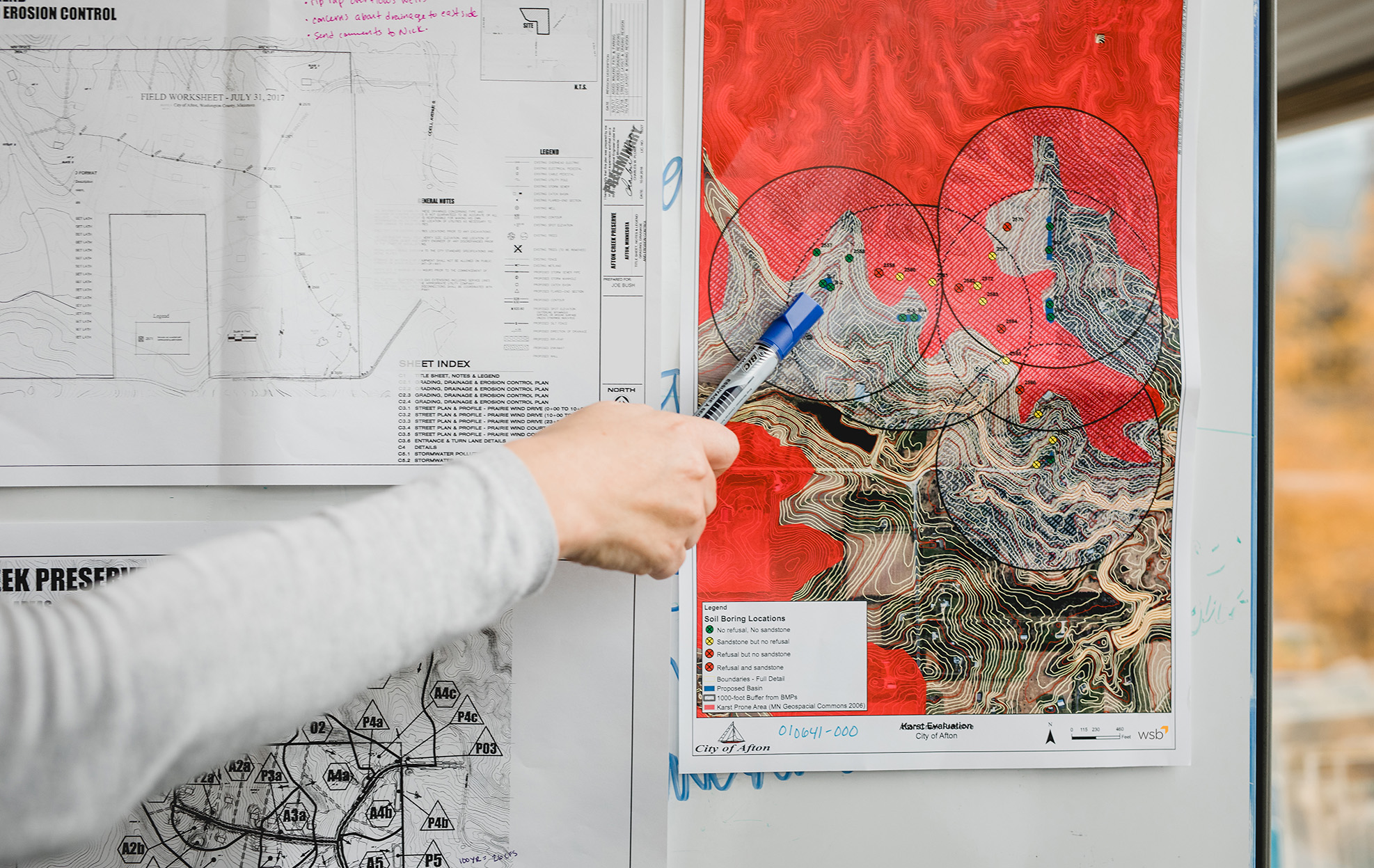
Early insight into soil, groundwater, and site conditions helps communities make informed decisions before design and construction begin. Geotechnical and environmental evaluations identify challenges that could otherwise lead to premature failures, environmental damage, or costly change orders later in a project’s life. Addressing these conditions early supports both sustainability and fiscal responsibility.
Stormwater management is another area where thoughtful planning has an outsized impact. Designing infrastructure that manages runoff effectively helps protect local waterways, reduce erosion, and comply with regulatory requirements. When stormwater systems are integrated into broader planning efforts, they contribute to healthier ecosystems and more resilient neighborhoods.
Communities are also increasingly focused on reducing construction-related environmental impacts. Better site planning, informed material selection, and coordinated construction oversight can limit disturbance to surrounding areas and shorten construction timelines, benefiting residents, staff, and the environment alike.
Finally, resilient infrastructure is essential as communities prepare for extreme weather and changing climate conditions as natural hazard events grow in frequency and intensity. Cities and counties that use both thoughtful community engagement and hazard-specific data to understand their unique vulnerability and exposure are better prepared to protect critical assets while supporting public safety and environmental stewardship.
At WSB, we help cities and counties reduce uncertainty by identifying risks early and addressing them before they affect project outcomes. Through integrated hazard mitigation planning, geotechnical, environmental, stormwater, and construction-phase support, we assist communities in navigating complex site conditions, regulatory requirements, and evolving climate challenges. Our teams focus on practical implementation, helping local governments move from planning to construction with fewer surprises, better coordination, and infrastructure that performs as intended for the long term.