By: Jared Langley, Remote Sensing Manager, WSB
The infrastructure industry is undergoing a quiet but powerful transformation. As technology advances and expectations rise, firms are asked to deliver more and with greater precision. Remote sensing has emerged as a key enabler of this shift, offering a new lens through which we can view, understand, and shape the built environment.
Remote sensing refers to the collection of data about the Earth’s surface from a distance, using technologies such as LiDAR (Light Detection and Ranging), photogrammetry, and UAVs. These tools allow us to capture high-resolution, geospatially accurate information quickly and safely, often over vast or hard-to-reach areas. But the true value lies not just in the data itself but in how that data is interpreted, integrated, and applied across the lifecycle of a project.
Across all phases, remote sensing is a powerful enabler of smarter, faster, and safer project delivery. It provides timely, high-resolution data that supports early decision-making, enhances design accuracy, streamlines construction oversight, and strengthens long-term asset management. By integrating this technology into every stage of the project lifecycle, teams gain a clearer understanding of site conditions and can respond with greater agility and confidence.
Choosing to utilize remote sensing is a strategic decision, and selecting a provider backed by full-service engineering expertise unlocks even greater value. When remote sensing is embedded within a multidisciplinary firm, data collection seamlessly aligns with planning, design, and construction workflows. The benefit is a unified team that understands the full project lifecycle and can translate geospatial intelligence into smarter infrastructure solutions from day one.
1. Accelerated Decision-Making from Day One
In the planning phase, remote sensing accelerates decision-making by providing rapid, large-area aerial surveys and 3D terrain models. These datasets support feasibility studies, environmental impact assessments, and early alignment planning, helping teams evaluate multiple corridors or sites before committing field crews. This early insight reduces risk, saves time, and ensures that projects begin with a strong foundation of information.
2. Enhanced Design Accuracy and Real-World Context
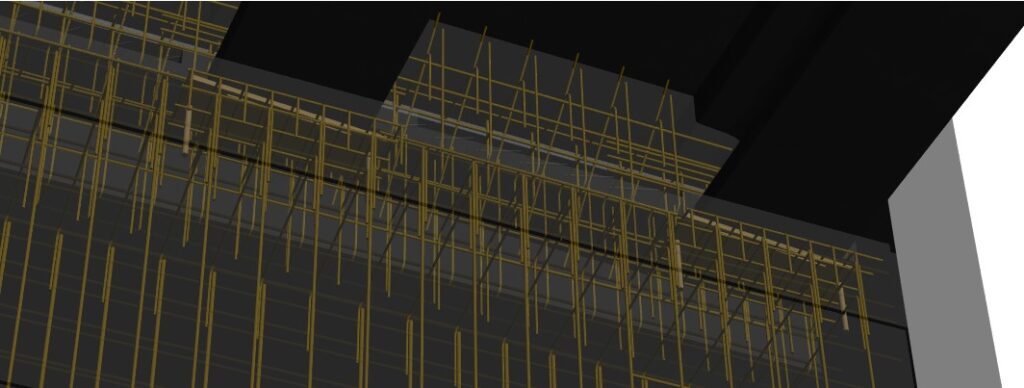
As projects move into design, remote sensing continues to add value. High-density point clouds and digital twins offer engineers a detailed, real-world context for their work. The result is more accurate designs, fewer surprises in the field, and a smoother path from concept to construction.
3. Transparent Construction Oversight and Documentation
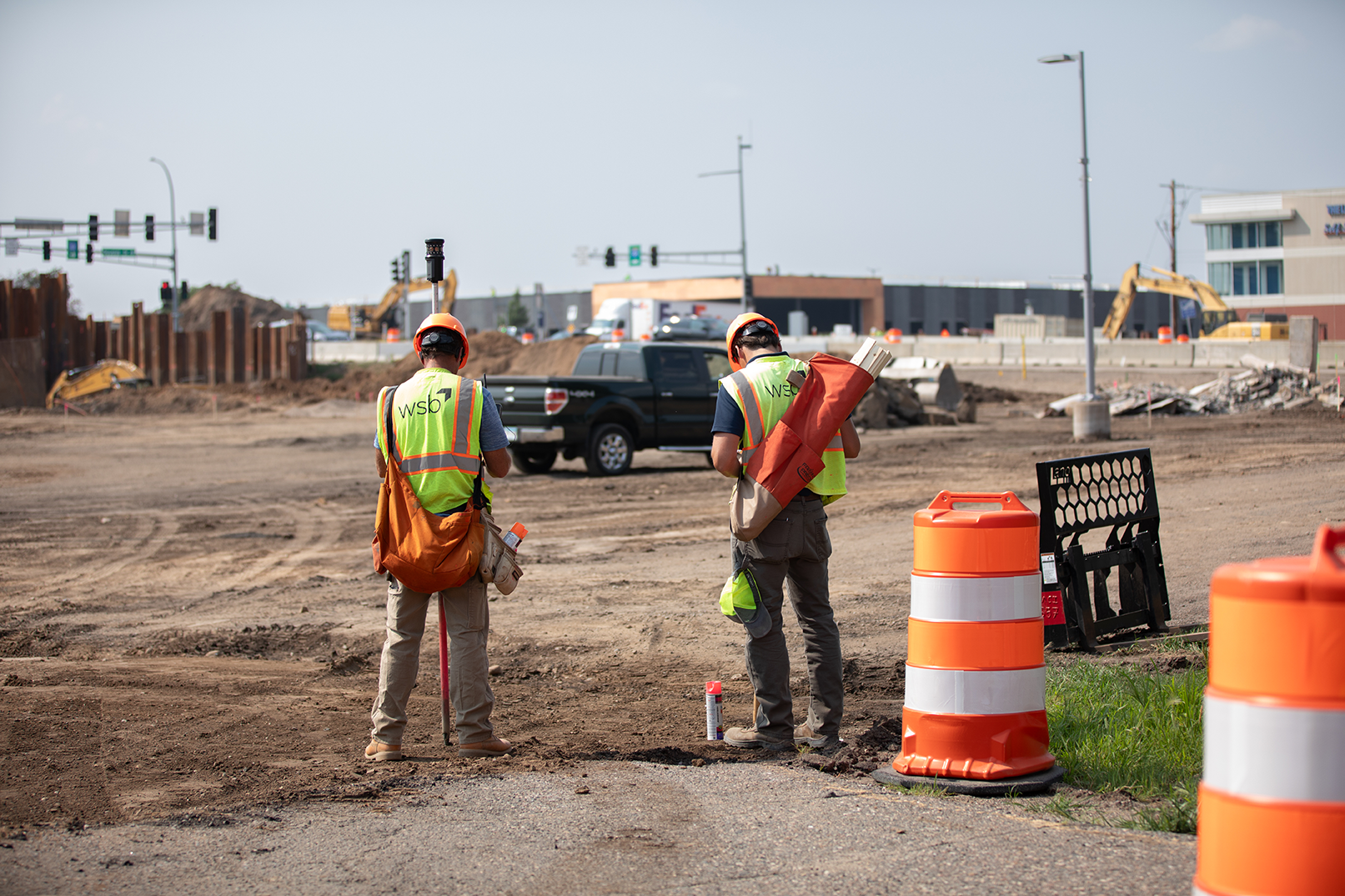
Remote sensing enhances surveying, too. Mobile and aerial LiDAR, combined with UAV-based imagery, allow survey teams to collect data more efficiently and with greater detail. During construction, remote sensing introduces a new level of objectivity and transparency. UAV flights generate dated, auditable orthomosaics and 3D models that document site conditions over time. These records support pay applications, earthwork validation, and compliance checks, reducing disputes and building trust among stakeholders.
4. Smarter Project Delivery
Digital construction management is another area where remote sensing plays a critical role. By feeding real-world conditions into digital platforms, we enable 4D scheduling, model-to-field alignment, and continuous validation. This creates a closed-loop system where design, construction, and reality are always in sync, ensuring that what’s built matches what was planned.
The industry is evolving, and so are the expectations placed on engineering and consulting firms. Clients want faster turnaround times, scalable solutions, and GIS-ready deliverables. Remote sensing helps meet these demands by accelerating data collection, minimizing field risk, and enabling customized analysis. Firms with internal remote sensing capabilities are better positioned to respond to these needs and anticipate the requirements of future contracts.
How WSB Can Help
At WSB, our remote sensing team works hand-in-hand with planners, engineers, surveyors, and construction managers. This integrated approach ensures that high-resolution data is not only collected but transformed into actionable insights. It’s a model that enhances accuracy, streamlines workflows, and delivers better outcomes for clients across all markets.
Remote sensing is more than a tool, it’s a catalyst for smarter, more efficient infrastructure delivery. And when paired with the depth and breadth of a full-service firm, it becomes a powerful differentiator. As the industry continues to evolve, WSB remains committed to leading with innovation, insight, and integrated expertise.