Projects
The Gateway to Tulsa: Reimagining the I-44 Corridor
Location:
Tulsa, OK
Expertise:
Transportation
Services:
Transit Planning, Transportation
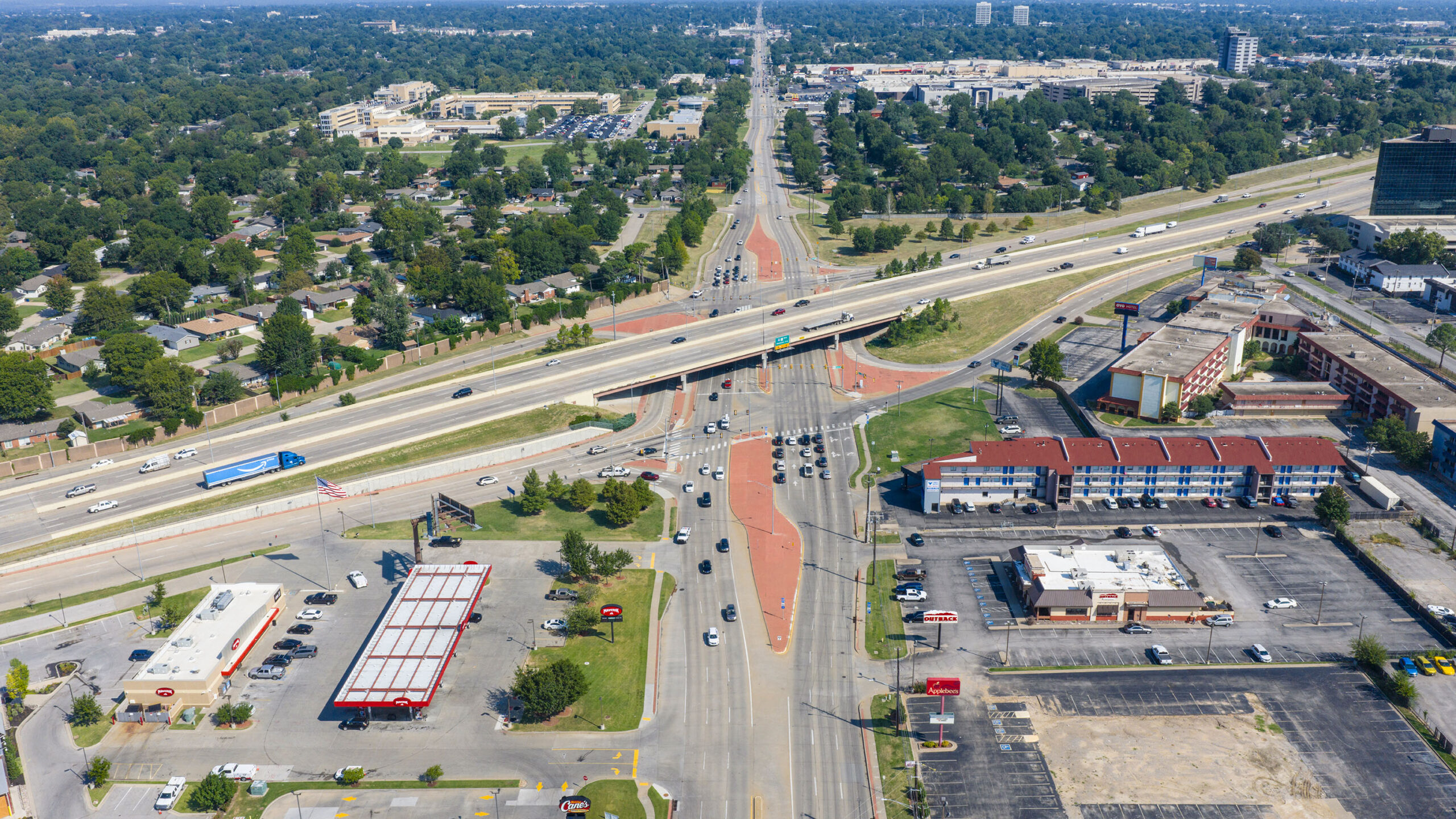
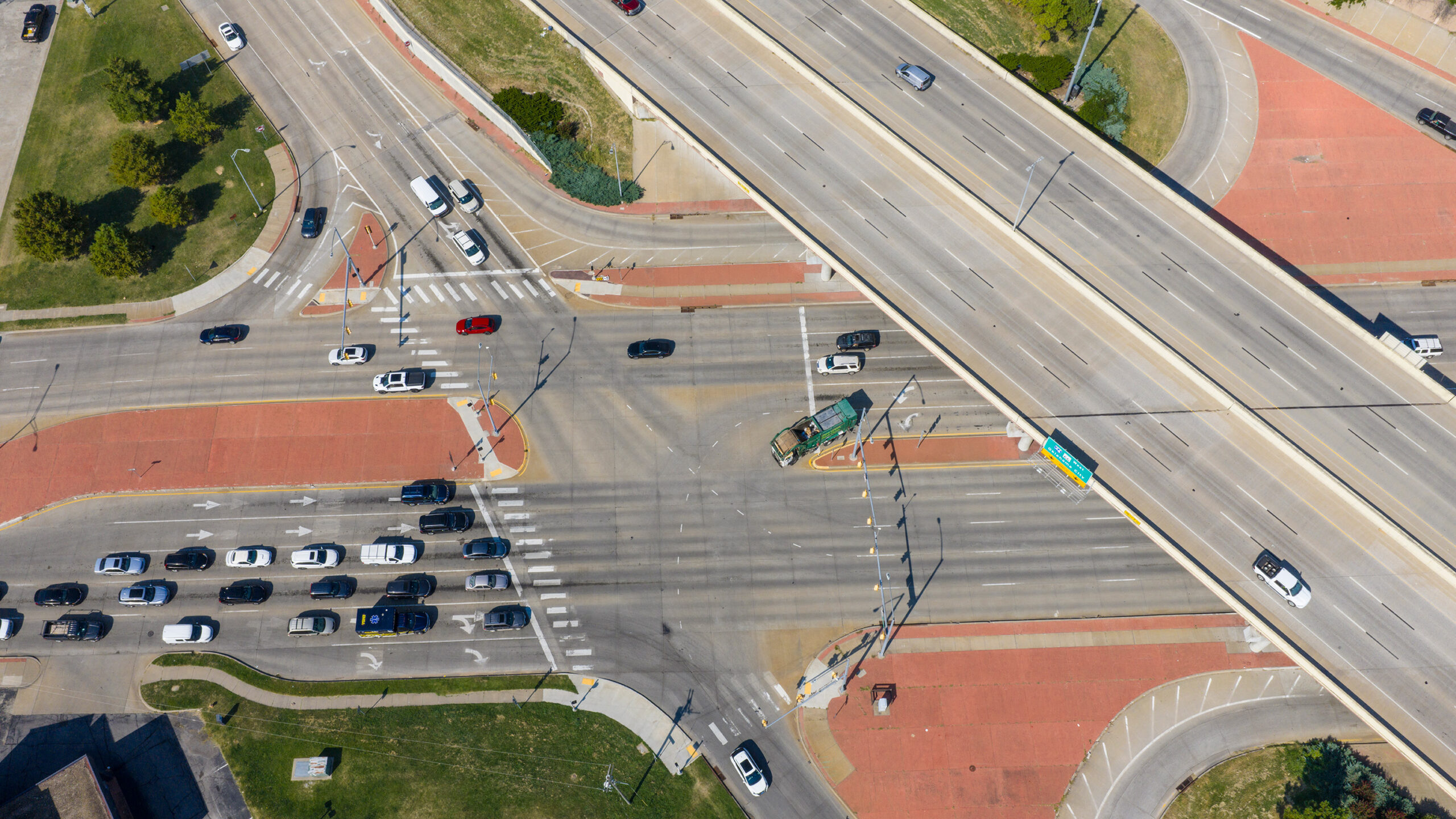
For decades, the stretch of I-44 weaving through Tulsa stood as a relic of mid-century infrastructure—built in the 1950s before interstate standards were formalized, it was a four-lane highway grandfathered into the national system. But as Tulsa grew and traffic intensified, this corridor became a bottleneck, a safety concern, and a missed opportunity for the city’s future.
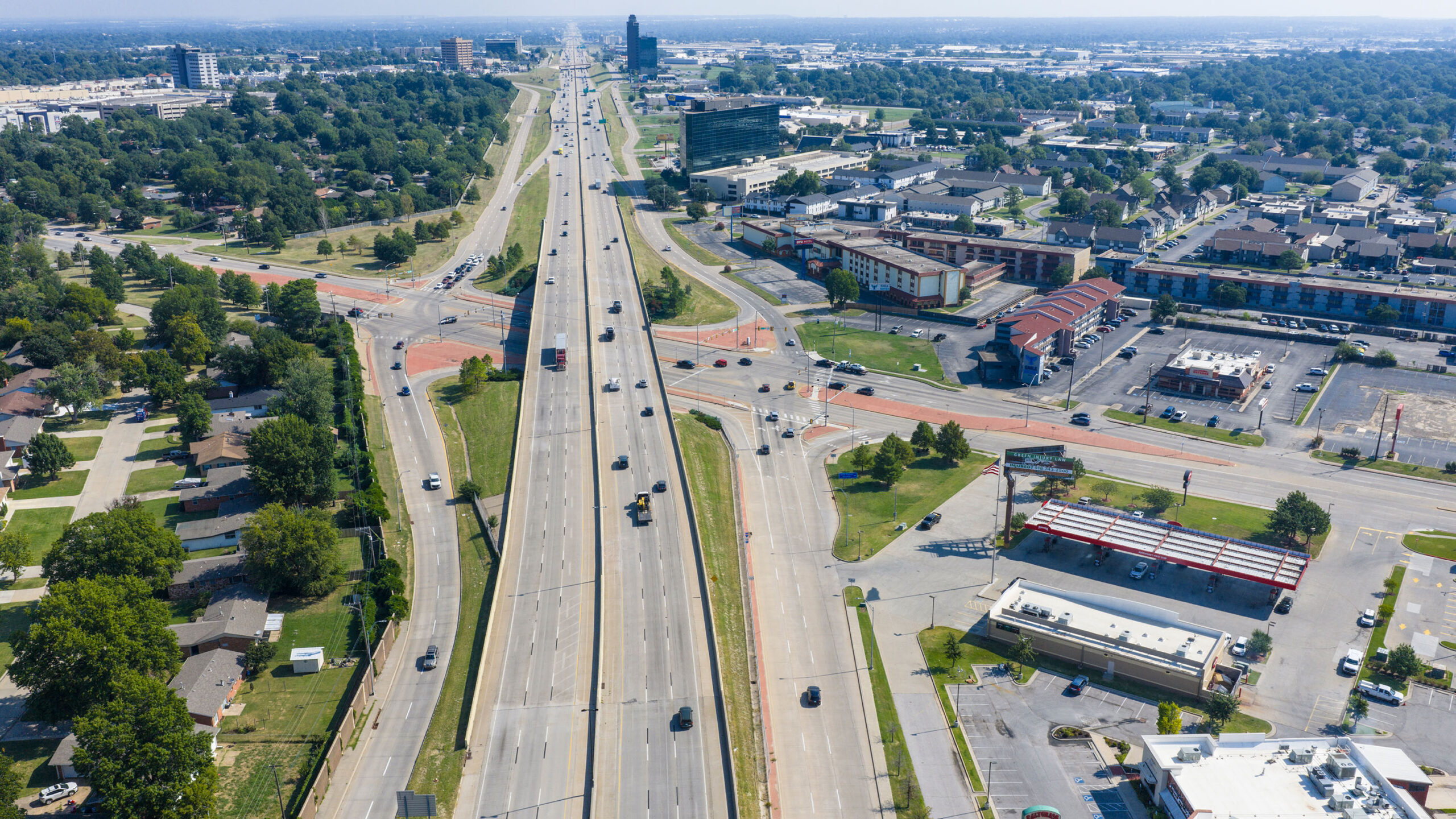
The transformation of I-44 into a modern six- to eight-lane interstate wasn’t just about widening pavement. It was about rethinking how infrastructure can serve a community, how it can be safer, more beautiful, and more forward-looking.
A Long Overdue Upgrade
The project addressed long-standing safety issues and congestion that had plagued the corridor for years. Interchanges were outdated, drainage systems were overwhelmed, and frontage roads created confusion. The redesign brought the highway up to full interstate standards, with controlled access and improved geometry to support higher speeds and safer travel.
But the impact went far beyond traffic flow.
Aesthetic and Cultural Transformation
In partnership with the City of Tulsa and the philanthropic Kaiser Foundation, the project introduced architectural detailing that elevated the corridor’s visual identity. Decorative sound walls inspired by Tulsa’s Art Deco heritage replaced plain concrete barriers, marking a true collaborative partnership between ODOT, the City of Tulsa and the community that has inspired subsequent beautification efforts in the region. These enhancements didn’t just beautify the drive—they redefined what a highway could be.
Economic Catalyst and Civic Pride
What was once a bypass on Tulsa’s southern edge is now a central artery of the city’s growth. The upgraded corridor has become a gateway to Tulsa, shaping first impressions for visitors and residents alike. It has relieved congestion, repositioned the system for future interchange work, and set the stage for continued development.
The project was completed by Craig & Keithline, a firm that was acquired by WSB in 2023. At that time, the project was a defining moment. Competing with larger firms in the region, they delivered one of the state’s largest interchange projects with a team of just 20 engineers. Their success helped secure future work and demonstrated that innovation and quality could come from any size firm.