Projects
Little River Park Detention Pond and Redevelopment
Location:
Moore, OK
Expertise:
Community, Environment
Services:
Environmental Compliance, Grants & Funding, Landscape Architecture, Water Resources
In 2013, the City of Moore, Oklahoma faced unimaginable loss when an EF-5 tornado tore through the community, leaving behind destruction that touched homes, businesses, and public spaces. Among the damaged areas was Little River Park—a beloved green space that had already been suffering from years of flooding and erosion.
Rebuilding with Purpose
The recovery wasn’t just about rebuilding—it was about reimagining. Our team identified the area as a significant flooding risk and proposed a multi-purpose solution that would not only mitigate future disasters but also restore the heart of the community.
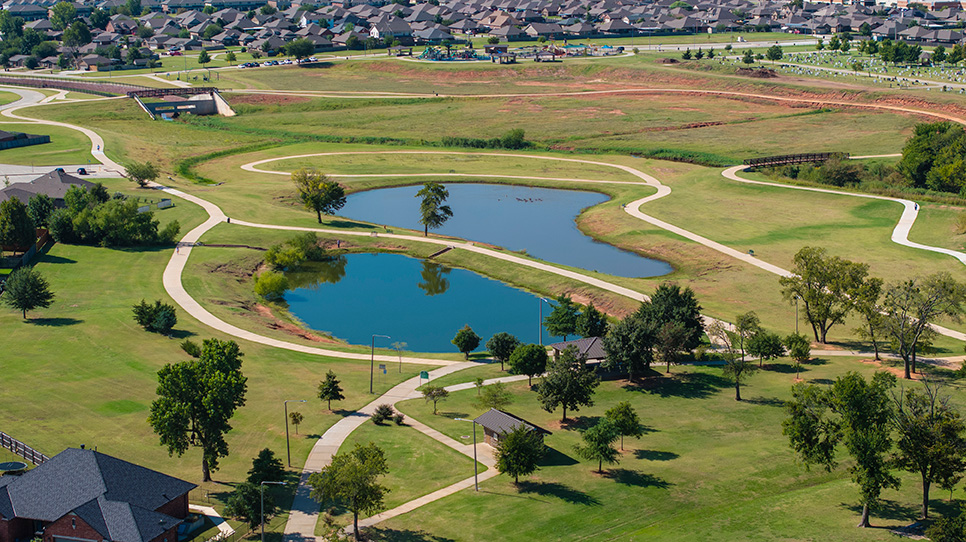
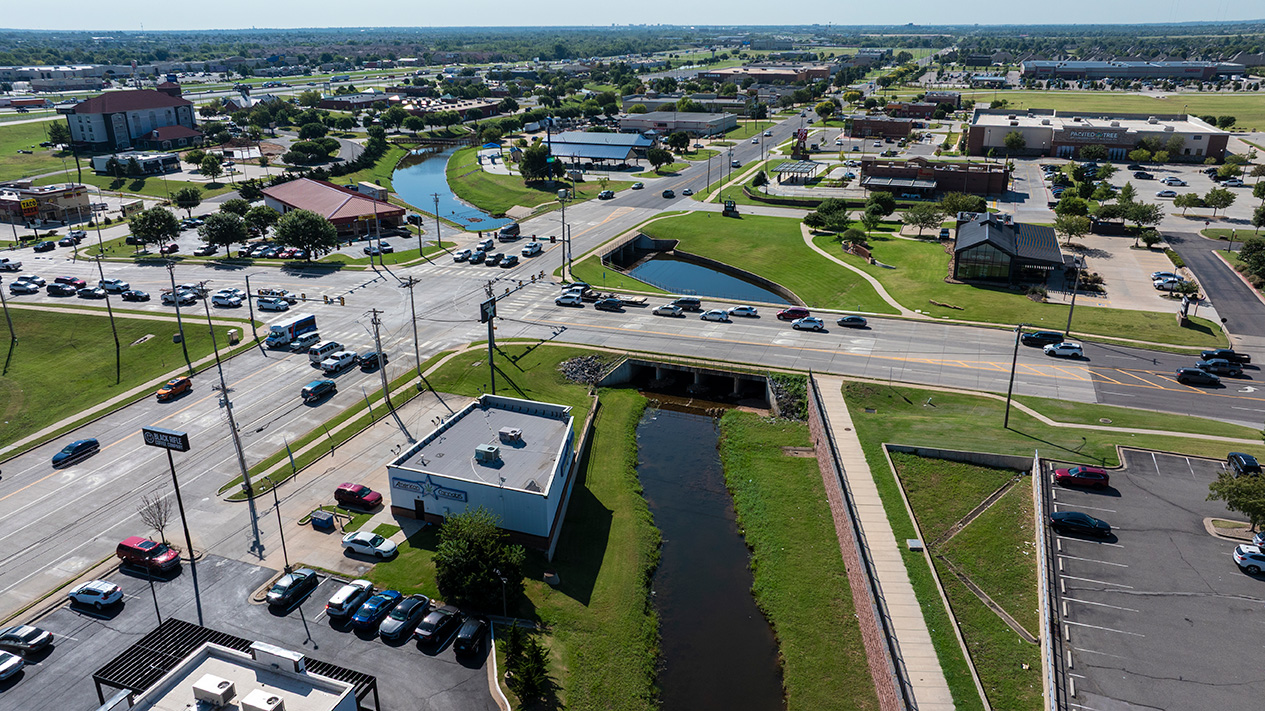
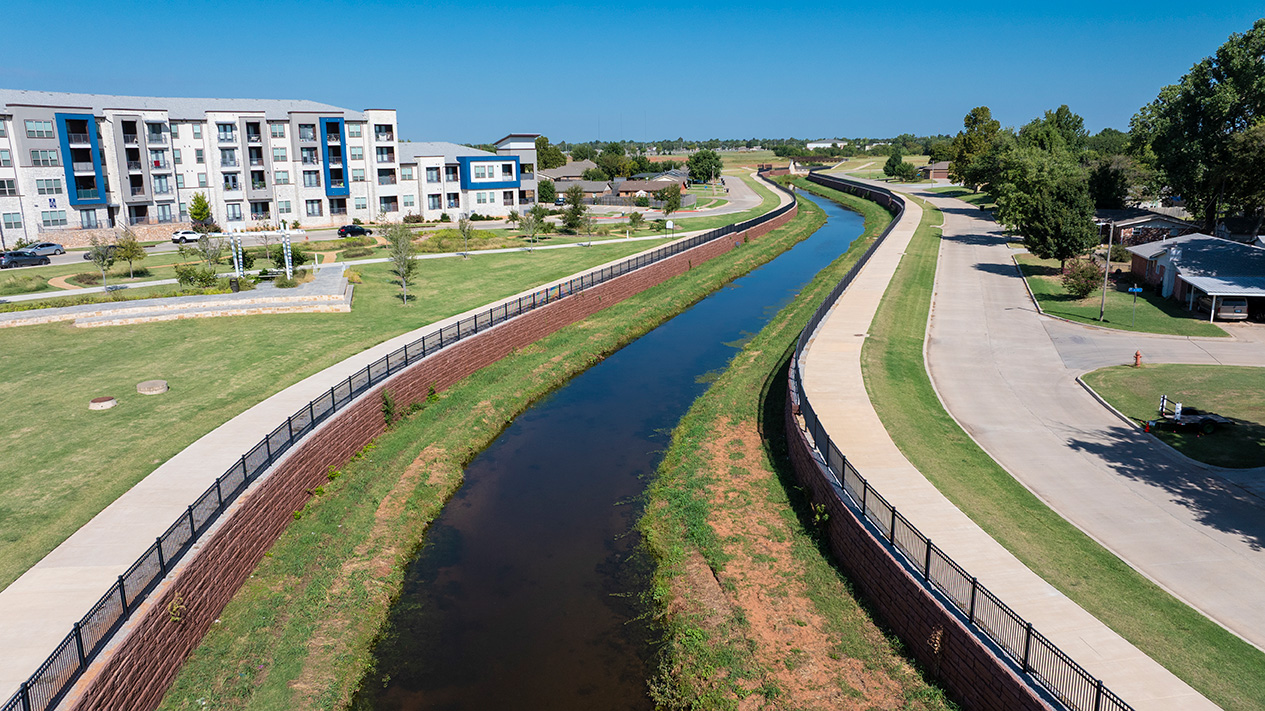
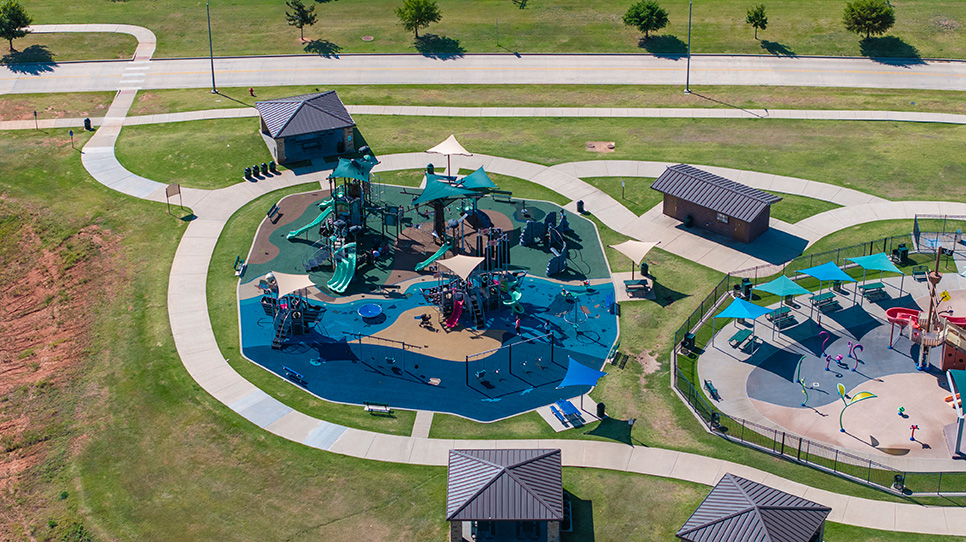
With disaster recovery funding and a strong relationship with the City of Moore, we helped lead the way toward a vision that blended infrastructure with imagination. The result was a regional flood control system that protects homes and businesses downstream, wrapped into a vibrant public space featuring pedestrian trails, bridges, a playground, and the largest splash pad in Oklahoma at the time of its completion.
A Community Reimagined
The transformation extended beyond the park. Adjacent to Little River Park, a new mixed-use development called The Curve replaced a mobile home park that was lost in the tornado. We played a key role in the site development—roads, grading, utilities—working alongside architects to bring new life to the area. It was a parallel effort, one that required trust, collaboration, and a shared commitment to making a lasting impact.
The project wasn’t without its challenges. Competing interests, environmental concerns, and budget constraints threatened to derail progress. But we worked together to find solutions, modifying plans when necessary and never losing sight of the goal: to create something better than what was lost.
And they did.
The area, devastated by the tornado and later hit by substantial flooding in 2015, is now unrecognizable—in the best way. The park preserves nearly a mile of wildlife habitat along the Little River, avoiding costly mitigation efforts while enhancing the natural beauty of the space. It’s a place where families gather, children play, and nature thrives.
A Legacy of Resilience
For Meshek & Associates (now WSB), the project marked a turning point. It wasn’t just another job—it was a moment that shaped the firm’s history and relationships with our clients. Gaining the City’s trust to lead such a complex, multi-level initiative was a proud achievement. WSB Vice President of Environmental, Brandon Claborn reflected, “Assisting on any one of those things would have been great, but to be able to do all of them at once, together, speaks to how we were making an impact in the community.”
Then City of Moore Mayor Lewis echoed that sentiment, praising the firm’s ability to take the City’s vision and exceed expectations. “The area has been redeveloped into a beautiful amenity that is unrecognizable,” he said. “The City of Moore is extremely happy with the Little River Park and Drainage Improvements project and values its strong relationship with Meshek.”
Today, Little River Park stands as a testament to what’s possible when recovery is guided by community needs and built on trust. It’s more than a park—it’s a symbol of resilience, a new normal that’s stronger, safer, and more connected than before. As WSB celebrates 30 years of service, projects like Little River Park stand as enduring examples of our commitment to resilient, community-driven solutions.